Skip to content

Organize processes into folders

How can I organize active processes into folders?

This article explains organizing active processes into folders 📁 in the Tracker view. Folders help sort and group processes for better tracking (e.g., by client, project, status). This organization approach enhances workflow visibility and project management efficiency.

How do I create or add processes to folders?

  1. Go to the Tracker view.
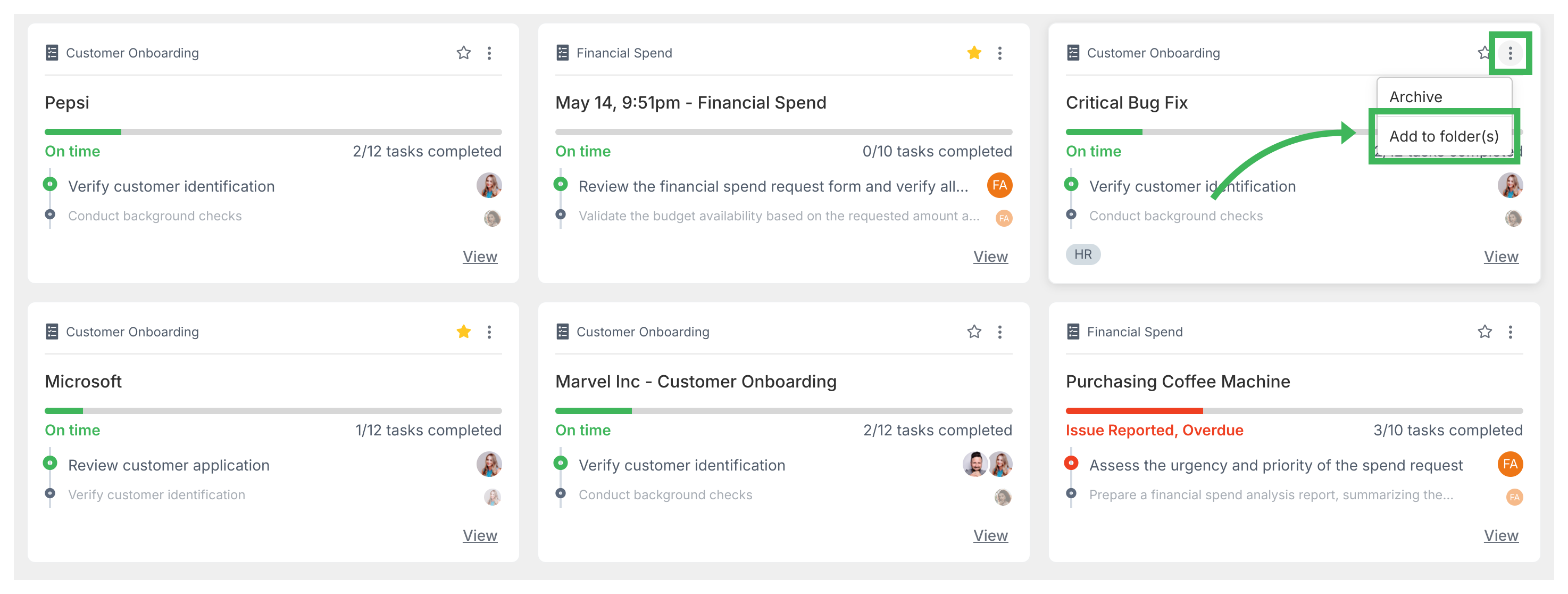
  2. Click the three dots (…) menu on the process card you want to organize.
  3. Select Add to Folder.
  4. Dialog box to create a new folder for organizing processes
  5. A window appears. Choose an existing folder or click Create Folder to make a new one.
  6. Select the desired folder and confirm.

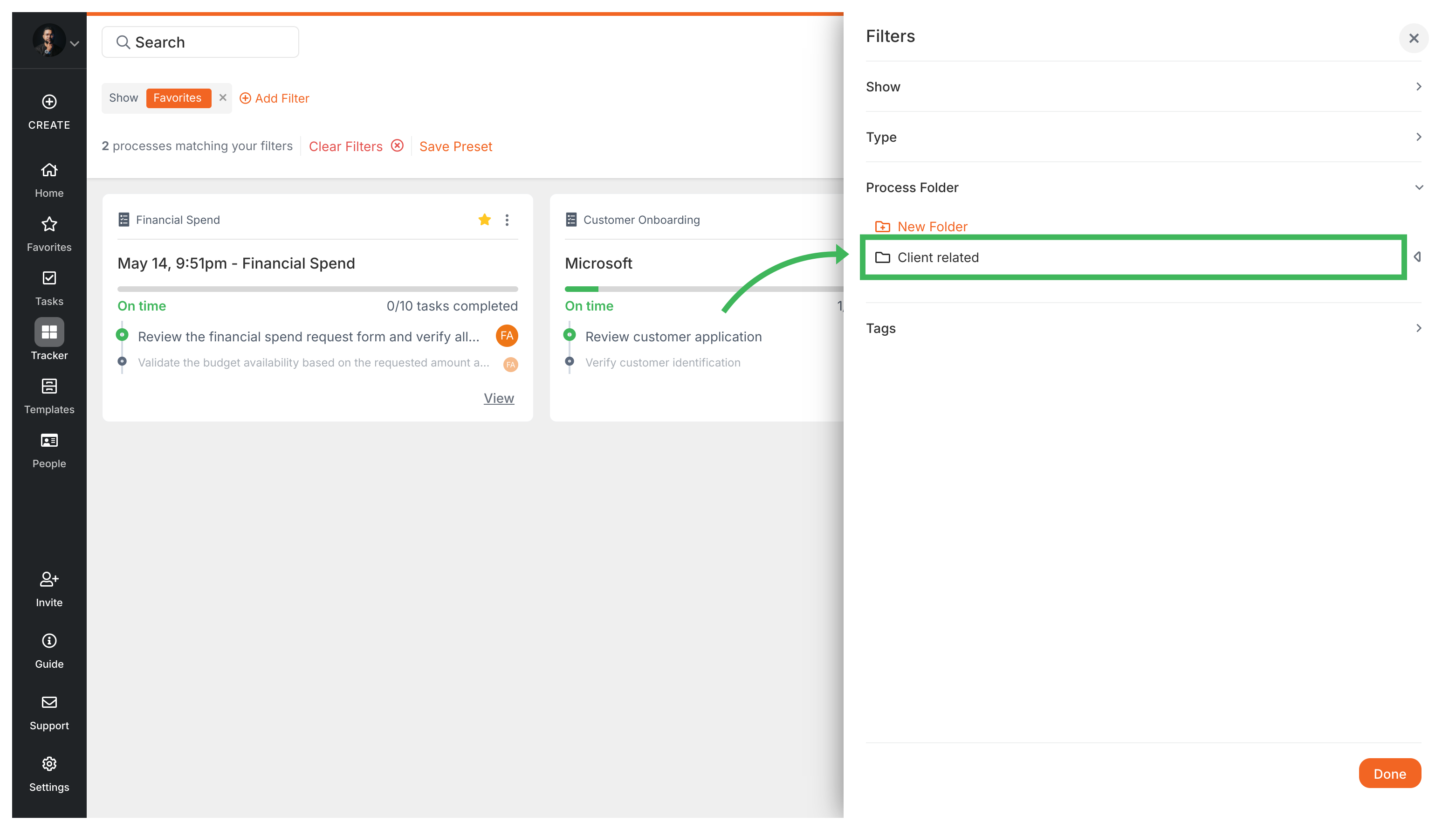
Once a process is in a folder, you can filter the Tracker view to show only processes in that folder:

  1. Click Add Filter at the top of the Tracker view.
  2. Choose the Folder filter.
  3. Select the folder name.
Process list filtered by Client related folder (46 chars)

Tasks View > Organize tasks and processes into folders

Tallyfy provides two separate folder systems - one for organizing master templates in the Templates library and another for organizing active work in Tasks and Tracker views - plus flexible tags that allow items to belong to multiple categories for enhanced workflow organization.

Tracker View > Organize processes

Tallyfy offers multiple organization methods including folders favorites filtering and archiving to help users efficiently manage and view their active processes for improved workflow visibility.

Templates > Using folders for templates

Template folders in Tallyfy help teams organize workflow blueprints by grouping related templates together which reduces search time by 70% and prevents the chaos of scrolling through endless template lists while maintaining separate organization systems for master templates versus running processes.

Tracker View > Manage and track my processes

Tallyfy’s Tracker view offers centralized process management through visual cards displaying key information like status due dates and assignments with comprehensive sorting filtering and color-coded status indicators to monitor workflow progress and identify issues across your workspace.