Skip to content

Auto-name a process

Why auto-name processes?

Auto-naming creates a consistent naming pattern for every process launched from a template. It pulls values directly from your kick-off form fields and builds the process name automatically - so you don’t end up with “Untitled” or inconsistent names across your team.

Without auto-namingWith auto-naming
Onboarding ClientOnboarding - Coca Cola - Memphis
Acme CorpOnboarding - Pepsi - New York
New HireNew Hire - Jane Smith - Marketing
John Doe StartNew Hire - Bob Johnson - Engineering
Ticket #123Support - TKT-456 - Beta Inc - Login
Urgent FixSupport - TKT-457 - Gamma LLC - Billing

How do I set it up?

Configure auto-naming once in your template. Every process launched from it gets a properly structured name.
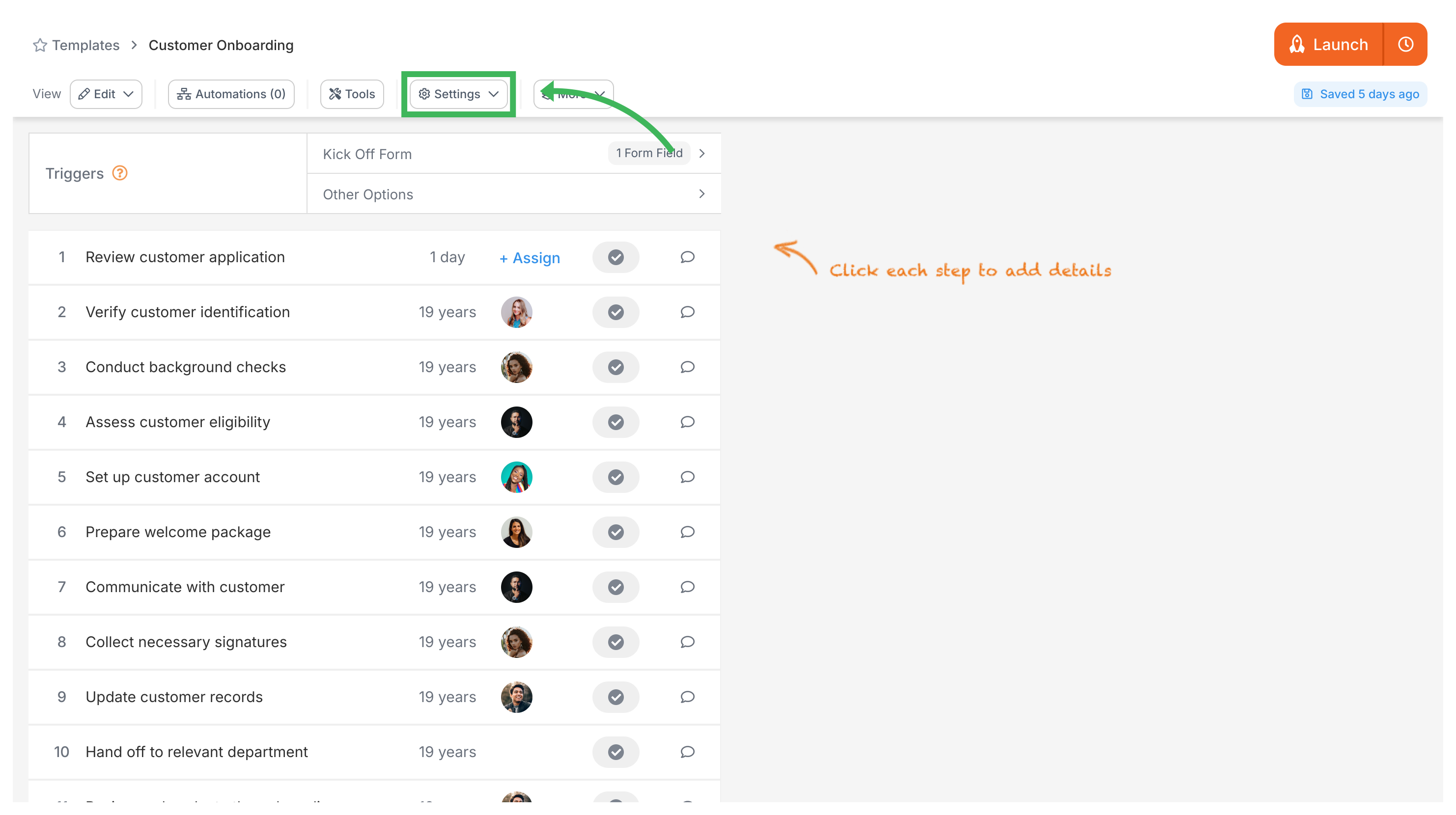
  1. Open the template in Edit mode.
  2. Click the Settings (or Config) button in the top toolbar. Template configuration dialog view view view
  3. Go to the Summary tab.
  4. Find Auto-name Process? and switch it to Yes.
  5. A text box appears where you define your naming pattern.
  6. Type static text (like “Onboarding -”) and insert variables using the button. You can also insert a built-in Date or Template Name variable. Field variables pull from your required kick-off form fields.
  7. Save your settings.

When someone launches a process, Tallyfy fills in the variable values from the kick-off form and generates the name. No manual typing needed.

Edit Processes > Rename a process

Rename any running process by clicking its name at the top of the process view, typing a new name in the rename dialog, and clicking Save.

Pro > Launching

Tallyfy lets you launch reusable templates into independent trackable processes — each with its own name and deadlines and assignments — through six different methods including manual clicks and API calls and email triggers and magic links while template edits only affect future launches and never alter already-running work.

Templates > Variables

Variables in Tallyfy are placeholders that automatically carry data entered in one process step (like a customer name or order number) to every other step that needs it — eliminating copy-paste errors and enabling personalized task titles and dynamic automation triggers based on form field values.