Skip to content
Developers

Sample Tableau visualizations

Ready-to-use Tableau charts for Tallyfy data

Section titled “Ready-to-use Tableau charts for Tallyfy data”

Here are 10 Tableau visualizations you can build from Tallyfy Analytics data. Each one answers specific business questions using your process, task, and form field data.

A histogram of tasks by how many days early or late they finished, based on due dates and completion timestamps. Early tasks show in green and late ones in orange. It’s useful for quarterly reviews.
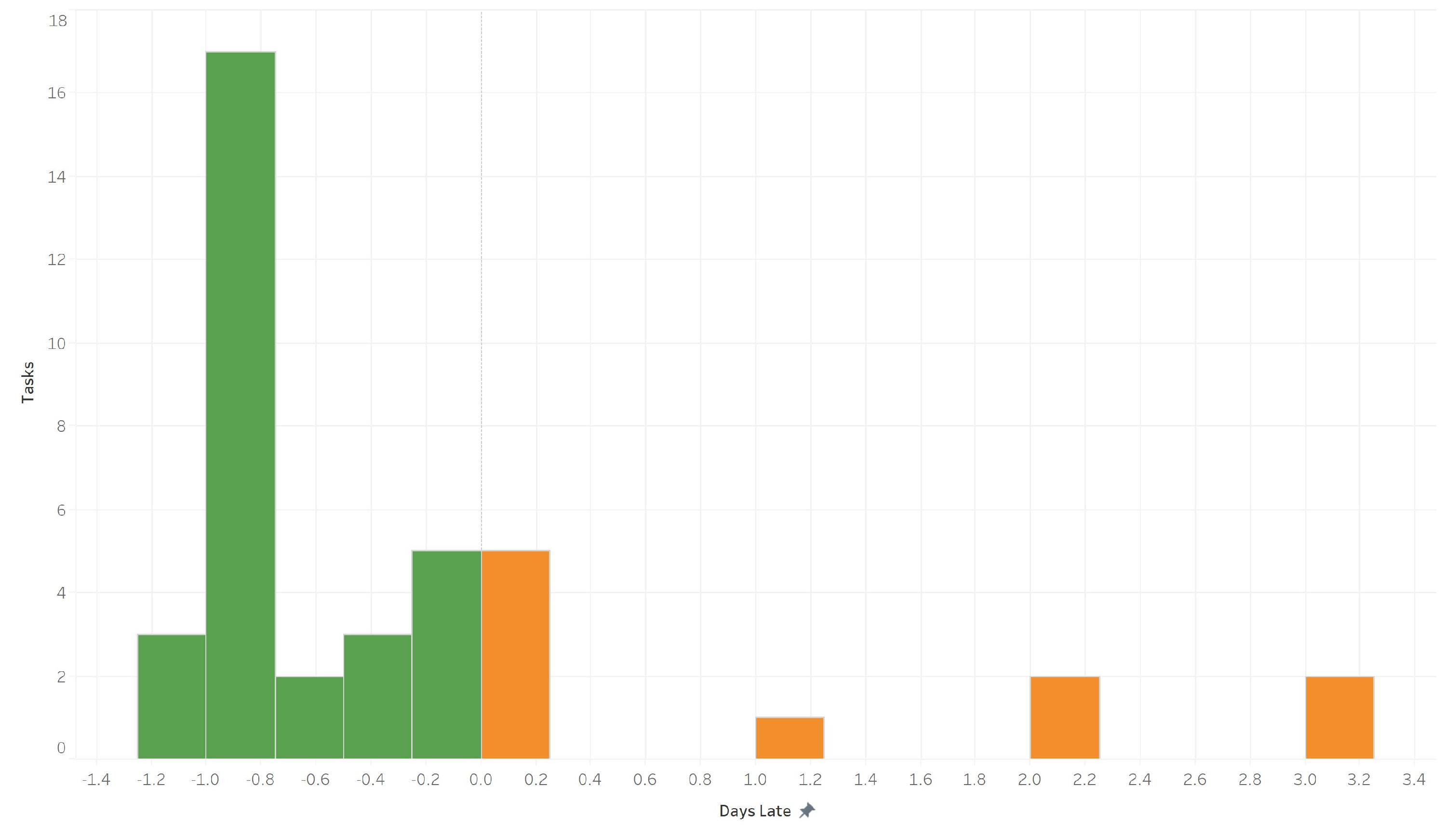
Tableau histogram of tasks by days late, with green bars for early tasks and orange bars for late tasks.

Questions this answers:

  • What percentage of tasks finish on schedule?
  • Are our due dates realistic?

A bar chart comparing on-time rates across team members. Spot who consistently hits deadlines, and who might need support.
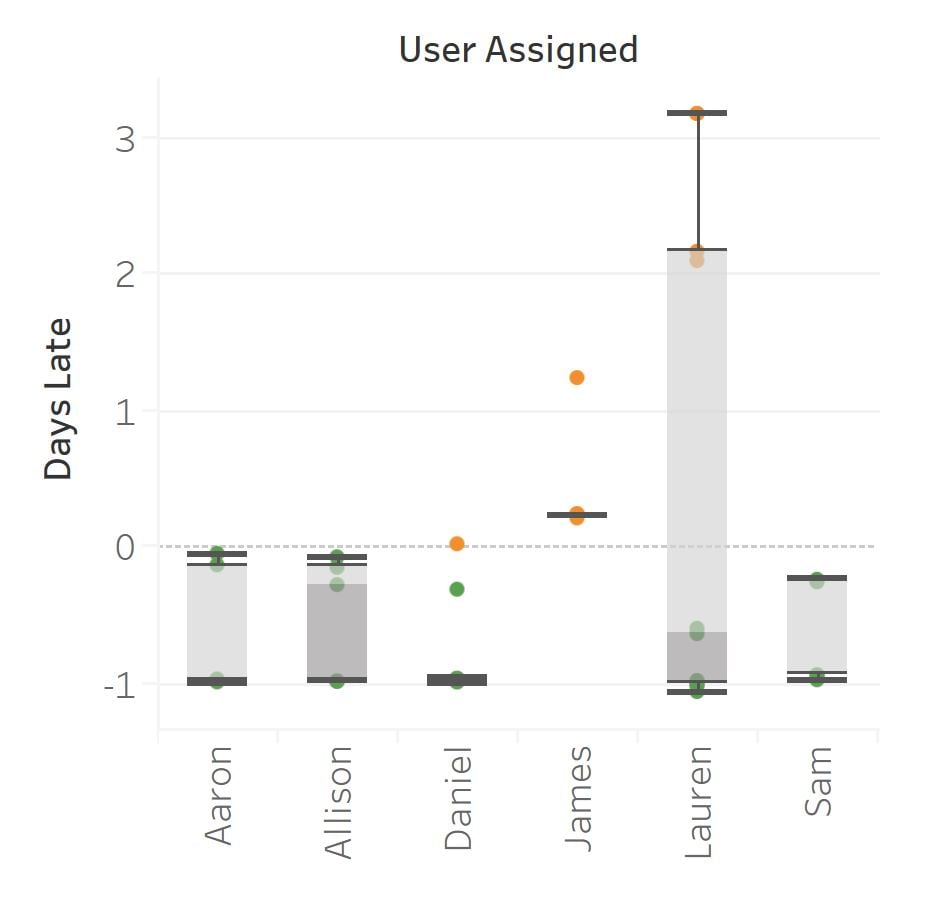
Tableau box plot of days late for each assigned user, with green dots for on-time tasks and orange dots for late ones.

Questions this answers:

  • Which team members meet deadlines most often?
  • Who might benefit from workload adjustments or deadline changes?

Track whether on-time completion is improving or declining week over week. It’s helpful for measuring the impact of process changes.
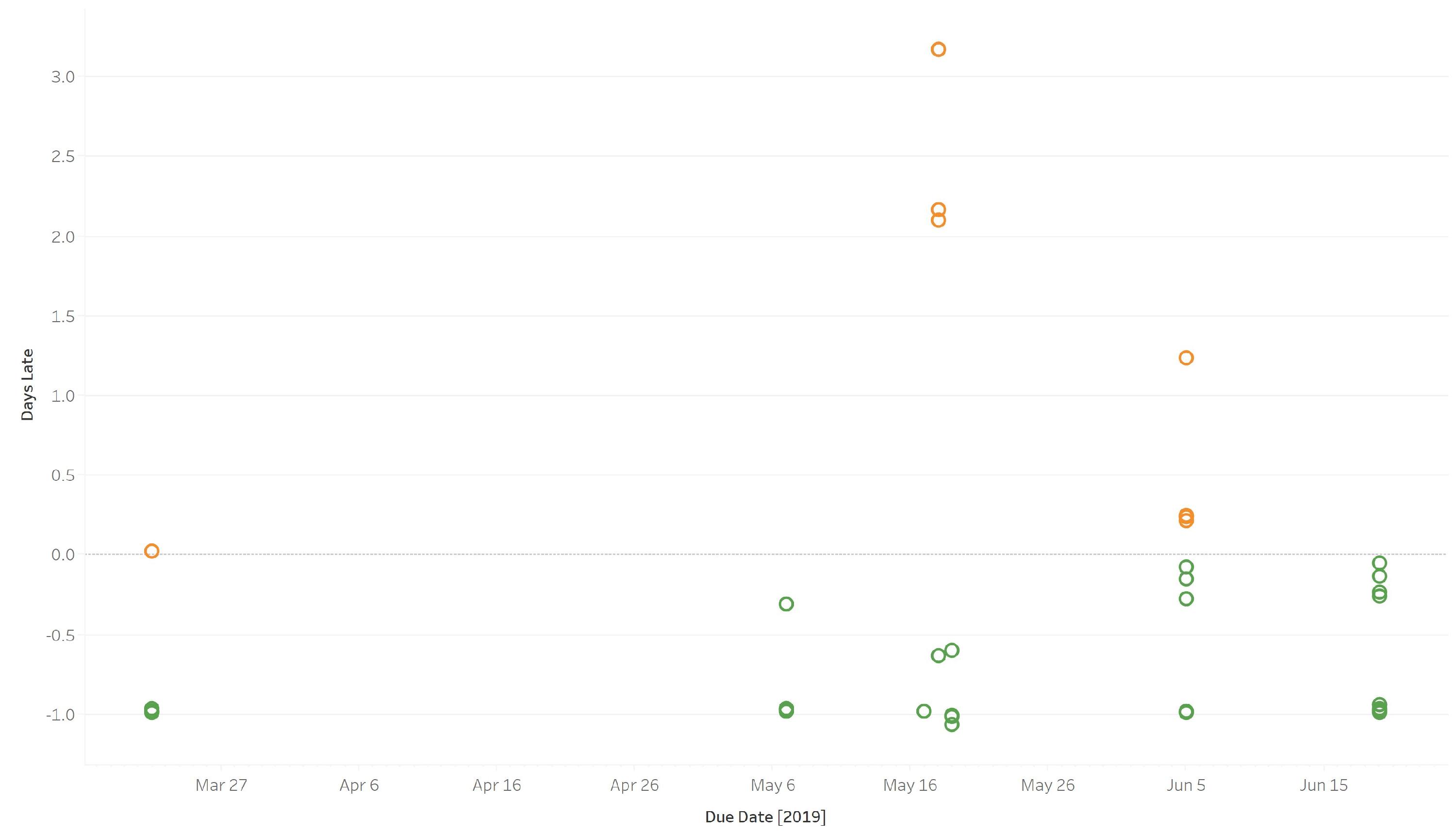
Tableau scatter chart of days late by due date from March to June 2019, with late tasks in orange above the zero line.

Questions this answers:

  • Is timeliness trending up or down?
  • Did a specific process change improve performance?

See how many processes each user owns. Quickly identify uneven workload distribution.
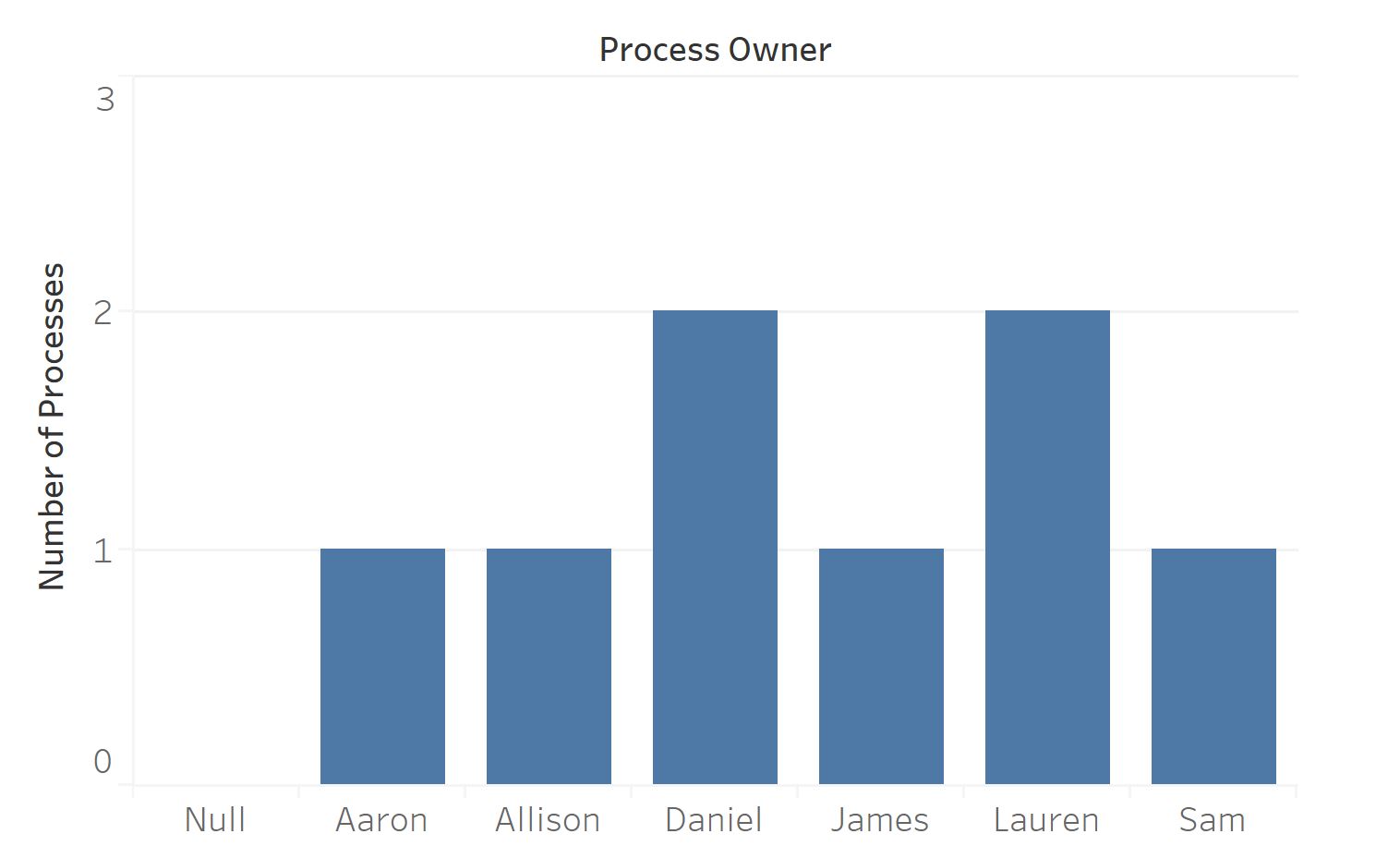
Tableau bar chart counting processes per process owner, with two owners at 2 processes and the rest at 1.

Questions this answers:

  • Is process ownership balanced across the team?
  • Are some users overloaded while others have capacity?

Count completed tasks per person over any time period. It’s built from assignee and completion timestamp data.
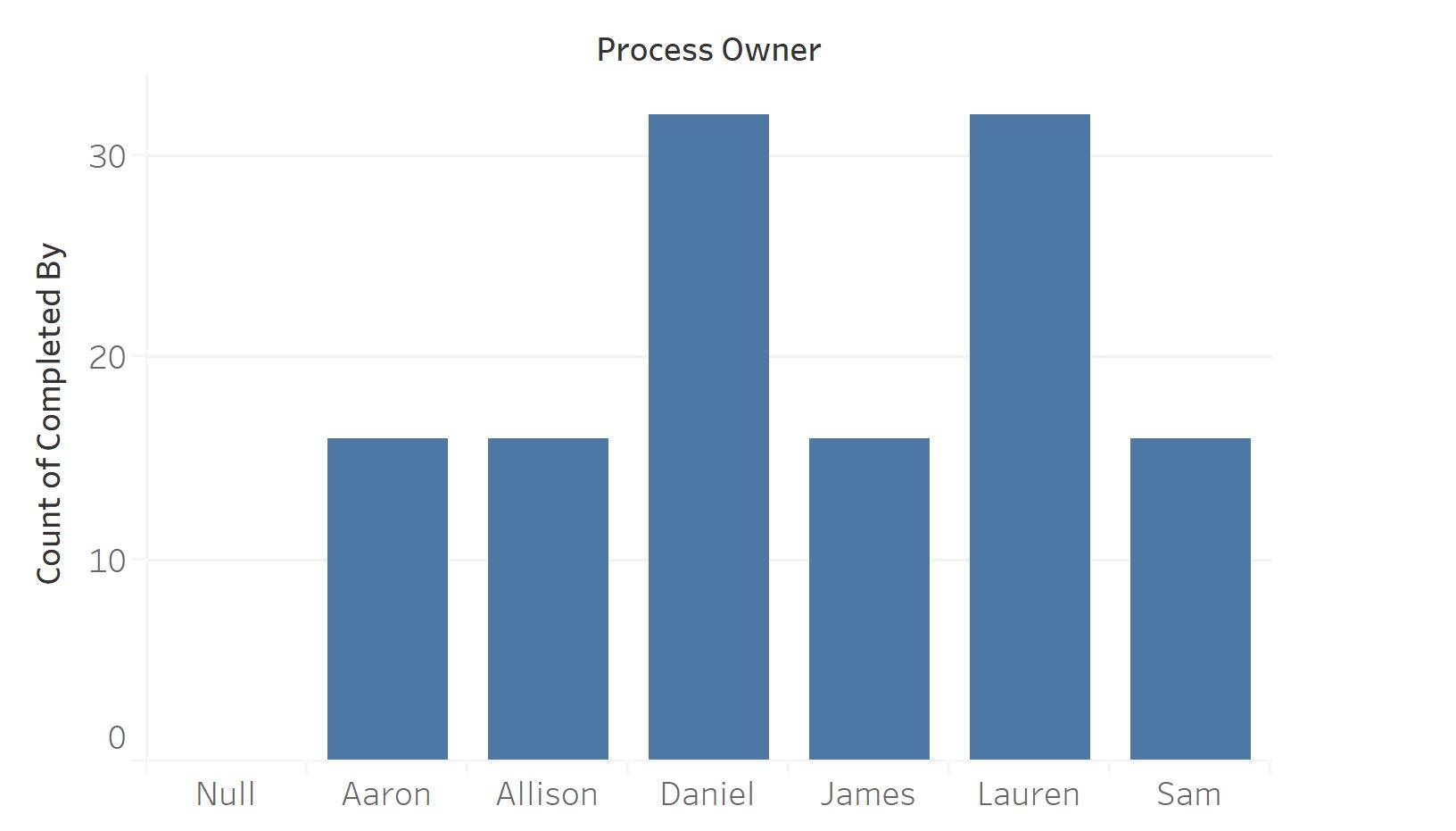
Tableau bar chart of completed task counts per user, with two users near 32 tasks and four near 16.

Questions this answers:

  • Who completes the most tasks?
  • Is workload distributed evenly?

A box plot comparing how late each step in your processes runs. Steps whose boxes sit higher run late more often, and they’re the steps worth redesigning.
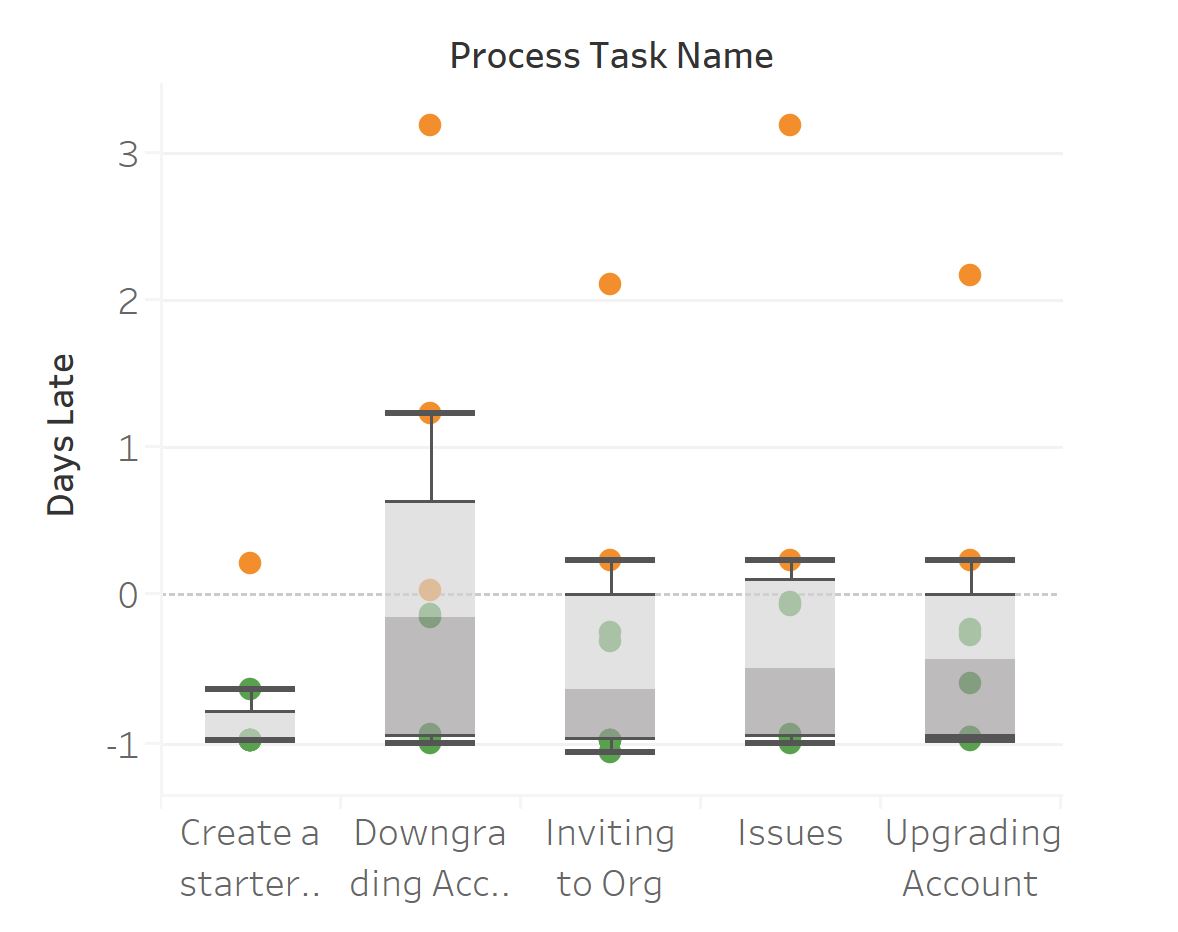
Tableau box plot of days late for each process step, such as Inviting to Org and Upgrading Account, with late tasks in orange.

Questions this answers:

  • Which steps consistently cause delays?
  • Are there steps that need redesigning or clearer instructions?

Shows how often each template gets launched. Identifies your most-used processes and templates that might be candidates for retirement.

Questions this answers:

  • Which templates are launched most frequently?
  • Are there templates that should be retired or consolidated?

A time-series chart of daily task completions. Reveals patterns like Monday spikes or Friday slowdowns.
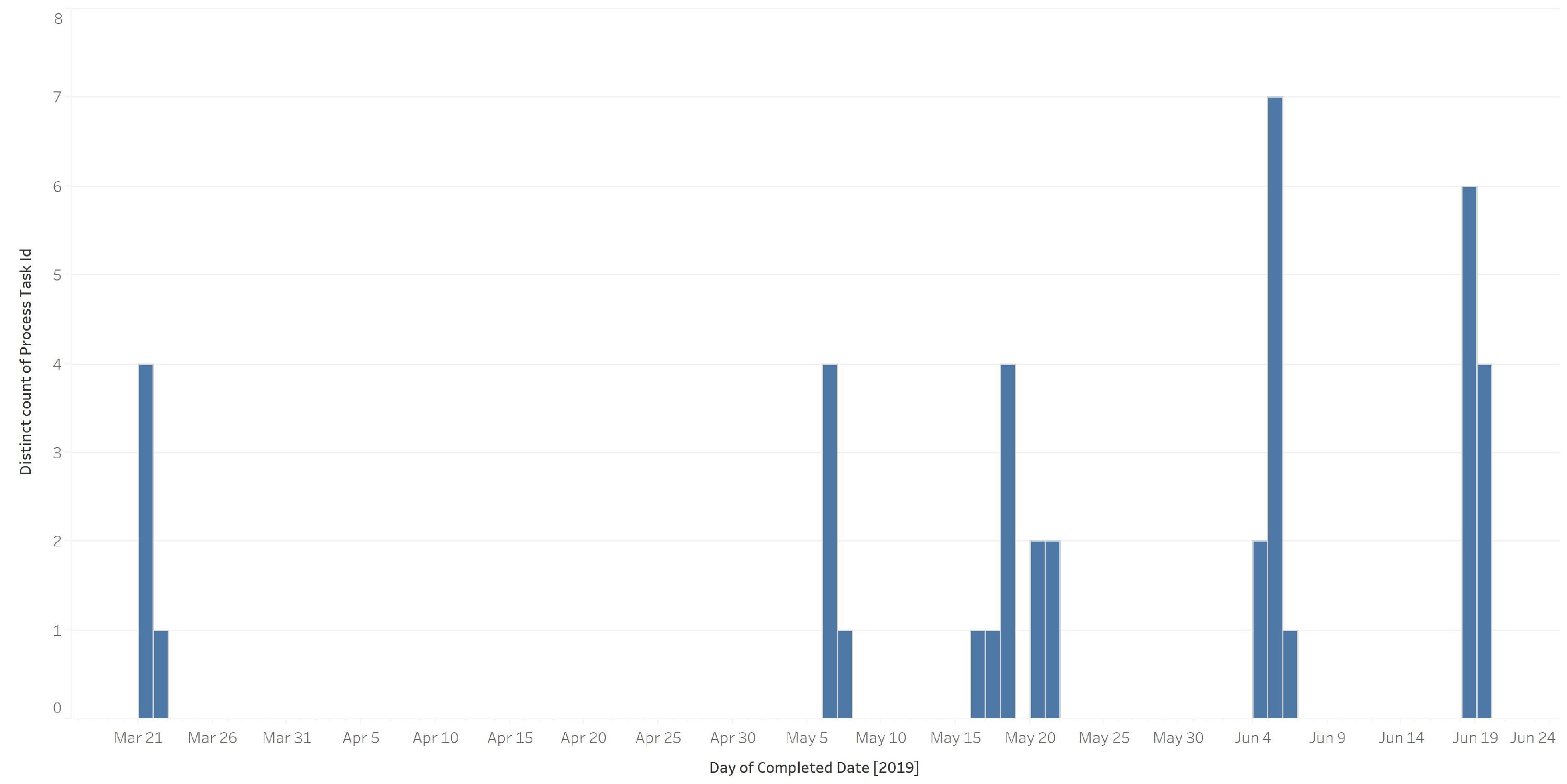
Tableau bar chart of tasks completed per day from March to June 2019, with the tallest bar of 7 in early June.

Questions this answers:

  • Are there day-of-week patterns in task completion?
  • Do we see consistent throughput or significant fluctuations?

High comment volume on specific tasks usually signals confusion. This chart pinpoints which steps generate the most discussion.
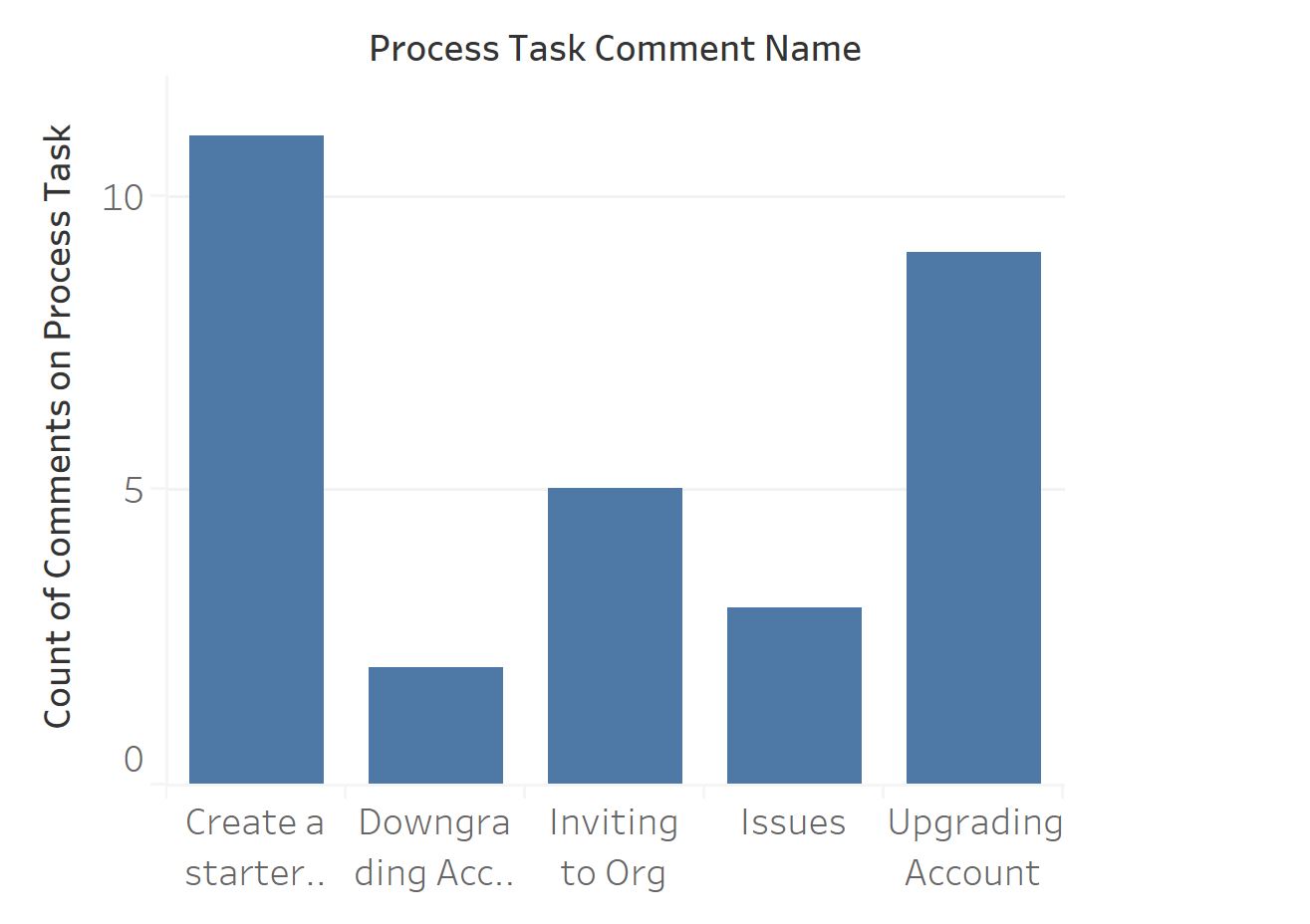
Tableau bar chart of comment counts per task, with about 11 on the first task and about 9 on Upgrading Account.

Questions this answers:

  • Which tasks need the most clarification?
  • Where should you improve step instructions or documentation?

Ranks tasks by how often they generate reported issues. Fix the top offenders first for the biggest improvement.
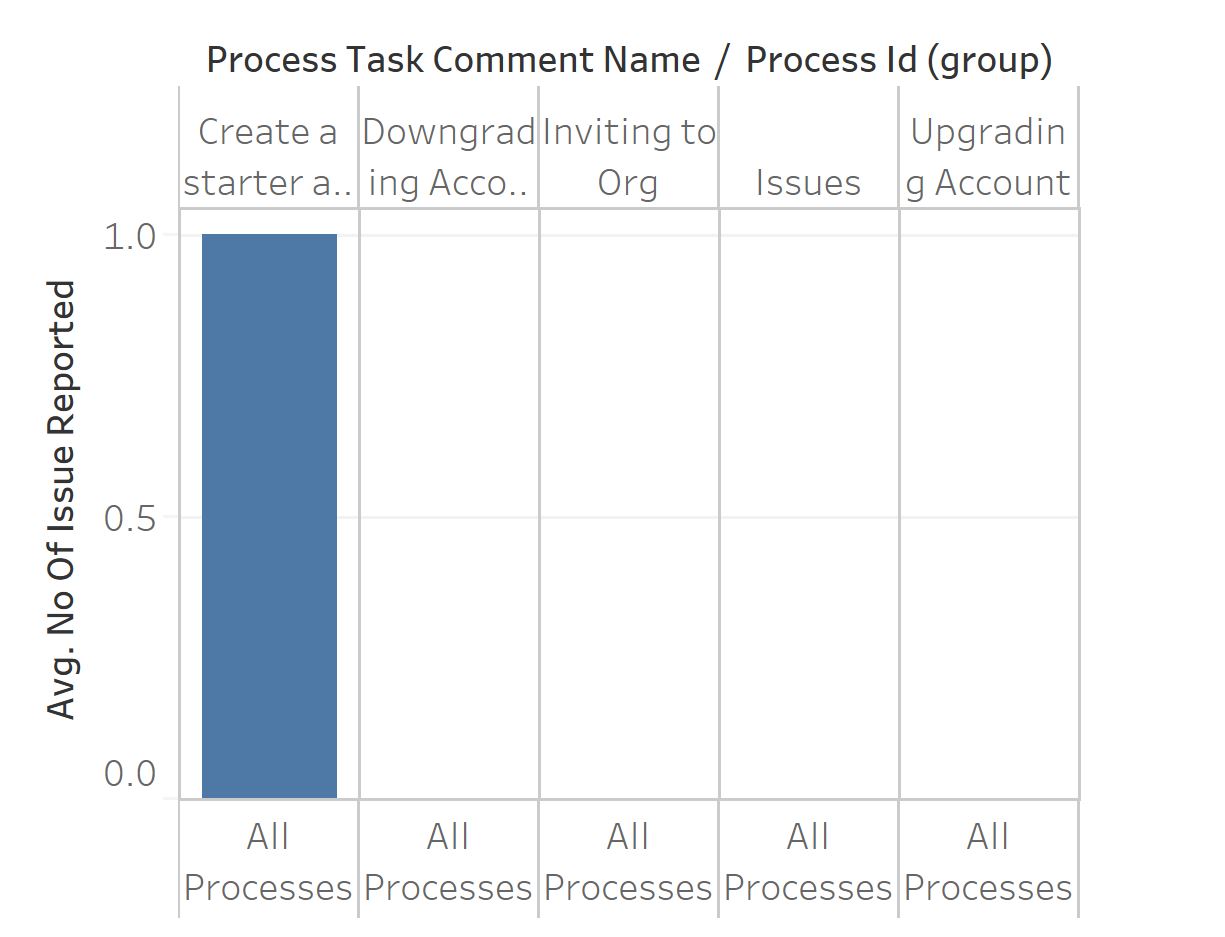
Tableau bar chart of average issues reported per task, where only the first task shows a bar, at 1.0.

Questions this answers:

  • Which tasks consistently produce problems?
  • Where should process improvement efforts focus first?

Get started quickly by downloading a pre-built Tableau workbook:
  1. Download the sample Tableau workbook ↗
  2. Open it in Tableau Desktop
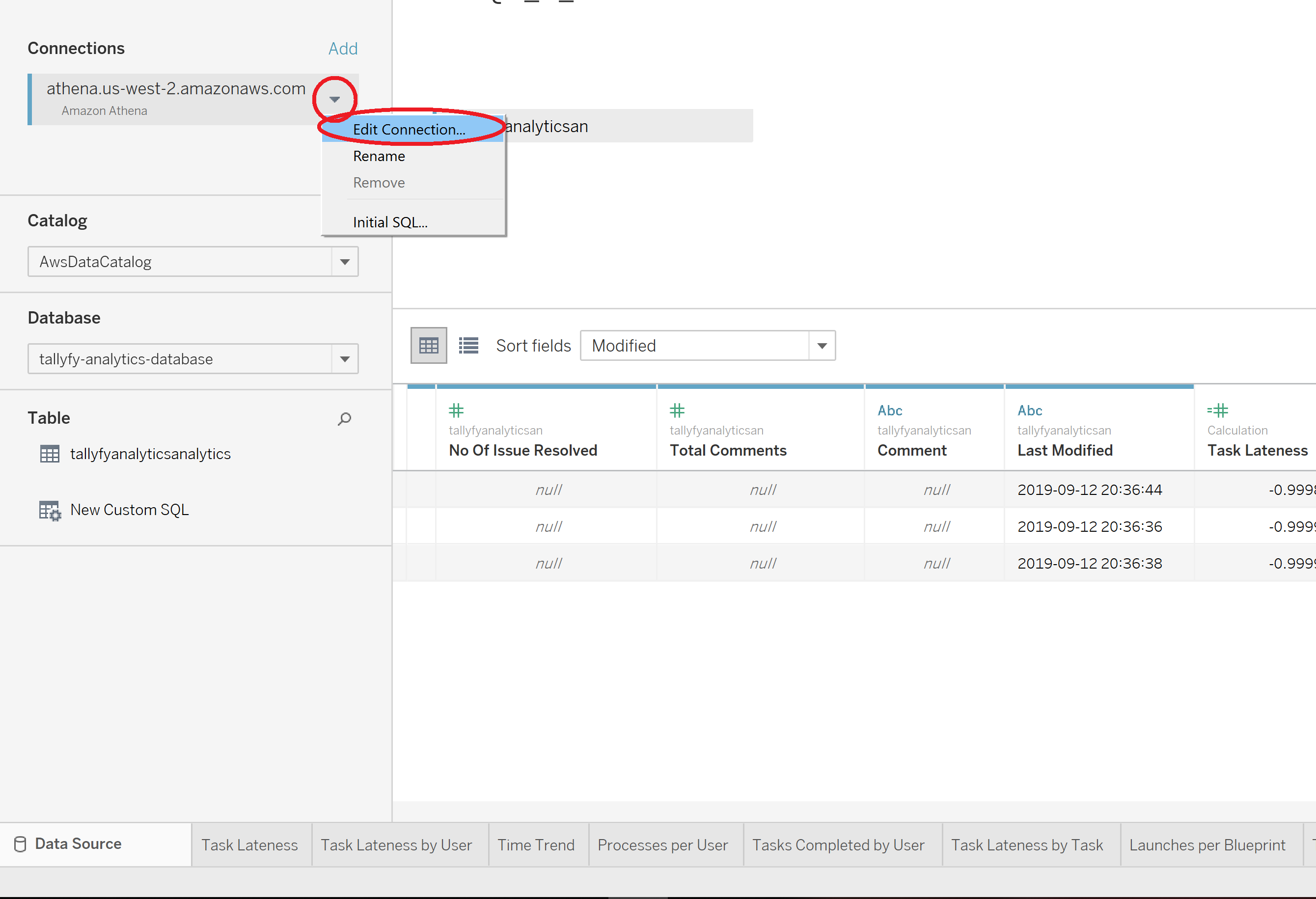
  3. Click Edit Connection and enter your own connection details. You will need the Athena server endpoint, the S3 staging directory, and the access key that Tallyfy provided you. Connecting Tableau to your Tallyfy data walks through every field.
  4. Customize the visualizations for your needs
Tableau Data Source tab with the Amazon Athena connection menu open and Edit Connection circled in red.

These 10 charts are starting points. Once you’ve connected to Tallyfy Analytics, you can build custom views for any question your workflow data can answer.

Analytics > Tableau

Tableau connects to Tallyfy Analytics through Amazon Athena, letting teams build interactive…