
How a telehealth team fixed broken patient workflows
Online Physio replaced whiteboards and sticky notes with Tallyfy to run patient workflows that auto-trigger when patients submit forms. No more guesswork.
Patient workflows in telehealth are a mess. They cross departments, touch confidential records, and fall apart the second someone forgets a single step. Here’s how we approach workflow management.
Workflow Made Easy
Summary
- Whiteboards and 10 sticky notes replaced by one app - Online Physio’s painful patient workflow setup involving forms, whiteboards, and manual tracking collapsed into Tallyfy within months, killing the guesswork and constant micro-managing of tasks across departments
- Webform submissions auto-trigger patient workflows - Through a Zapier integration, patient consultation processes kick off the moment someone submits a form, so the physiotherapy team already knows their tasks and deadlines before the process even launches
- Healthcare-grade security for patient records - Secure record-keeping addresses confidentiality concerns head-on for cross-department telehealth consultations serving patients who struggle to access in-person physiotherapy
- Visibility creates real accountability - Every person sees exactly what needs doing and how long it’s been sitting there, with automatic follow-up reminders preventing anyone from being forgotten. Need to fix your patient workflows?
Online Physio - A pioneering service that provided online physiotherapy consultation to patients who struggled to access in-person care. Founded by Karen Finnin in 2011 as Australia’s first entirely online private physiotherapy practice, Online Physio’s distributed team used Tallyfy to run reliable patient workflows and streamline their digital marketing processes.

Karen Finnin
Director
Online Physio
The problem that needed solving
It’s critical for a telehealth practice to follow a defined patient workflow. Multiple team members from different departments need to finish tasks on time, and bottlenecks can’t be tolerated. The question was simple but brutally hard to solve - how do you make sure every person in the chain finishes their work within assigned deadlines, without someone constantly hovering over everyone’s shoulder?
This is a pattern I’ve seen over and over again. Healthcare teams know their process. They can draw it on a napkin. They just don’t have a reliable way to enforce it across distributed staff who never share the same physical space.
Telehealth makes it worse. When your physiotherapists are scattered across locations - sometimes different time zones - the old tricks of walking over to someone’s desk and asking “did you finish that?” simply vanish. You need something that replaces the hallway conversation with the same directness, minus the proximity.
And the financial pressure is real. MGMA research shows that medical practice overhead typically eats up 60% of revenue. When your workflows are broken, that number climbs. Every missed handoff, every duplicated effort, every “I thought you were doing that” conversation chips away at what should be going toward patient care.
Which processes run on Tallyfy?
Online Physio started with social media content management. That was the test run. Once they trusted the platform, they moved their core process onto it - the patient care workflow.
The whole point of their practice was engaging thoroughly with patients and making sure every consultation step flowed into the next without gaps. That requires security too. Patient data isn’t something you leave in a shared spreadsheet. Tallyfy’s secure platform addressed their confidentiality concerns without adding complexity.
In our experience, this progression - start with something internal and low-risk, then graduate to patient-facing workflows - is extremely common in healthcare. Teams need to build confidence with any new tool before they trust it with clinical operations. I think that’s wise. Nobody should rush something that touches patient records.
What they used before
They’d tried different project management tools that couldn’t trigger tasks at the right time. Many process management tools were also absurdly expensive for what they offered.
Look - healthcare workflows are different because timing matters more than in most industries. A missed step isn’t just an inconvenience. It can affect patient outcomes. Most project tools treat everything as a flat task list with checkboxes. That’s not how clinical processes work. Clinical work has dependencies - Step B can’t happen until Step A is confirmed, the patient record needs to be reviewed before the consultation can be scheduled, and forms need to be completed before treatment begins. A generic task manager that lets you tick things off in any order is worse than useless in this context - it creates a false sense of completion while letting critical handoffs fall through. Research published in the Journal of the American Medical Informatics Association identified that healthcare workflow automation needs to focus on specific priority areas like care management and patient handoffs - not just digitizing existing paper processes. In other words, you can’t just throw technology at a broken workflow and expect it to magically improve.
Online Physio tried the whiteboard approach. Sticky notes. Paper forms. The problem? Nobody could see the full picture unless they were physically standing in front of that whiteboard. And when you’re running a distributed telehealth practice, “standing in front of the whiteboard” isn’t an option for half your team.
Why they picked Tallyfy
They wanted something intuitive. Easy to assign and track not just one-off tasks, but recurring workflows that happen dozens of times per week. They tried Trello, Things app, and Process Street. None of them hit the mark on security and workflow automation.
Tallyfy had the security and flexibility they needed in a patient workflow management tool. Once they started using it, there was no looking back.
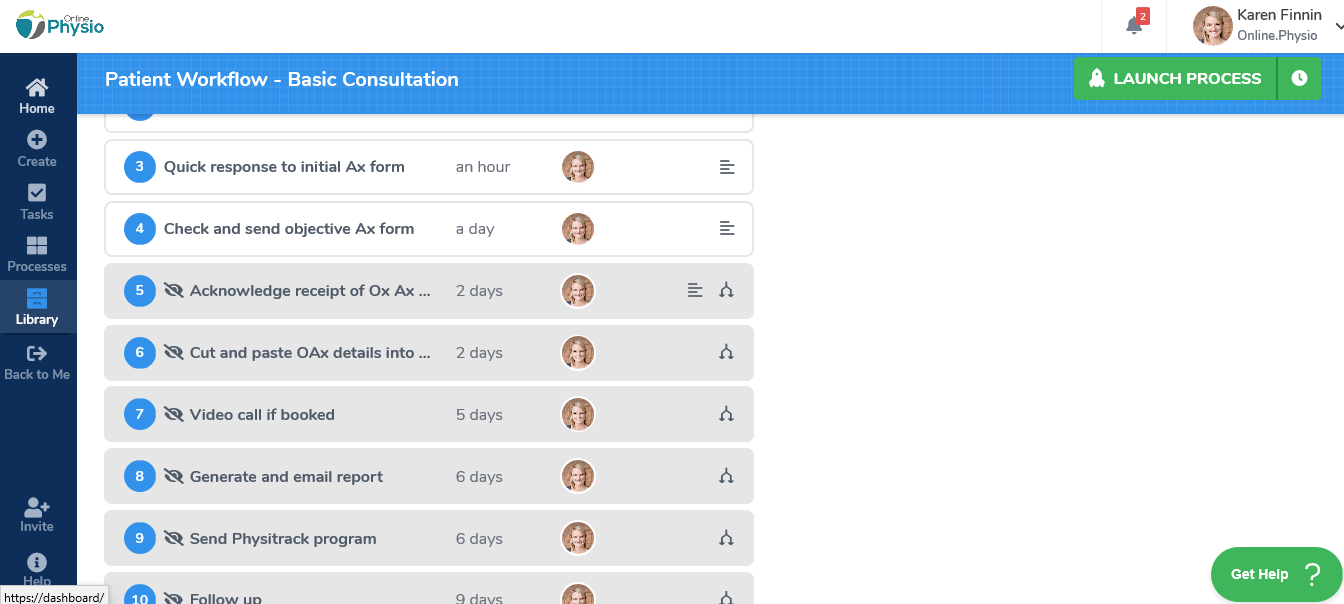
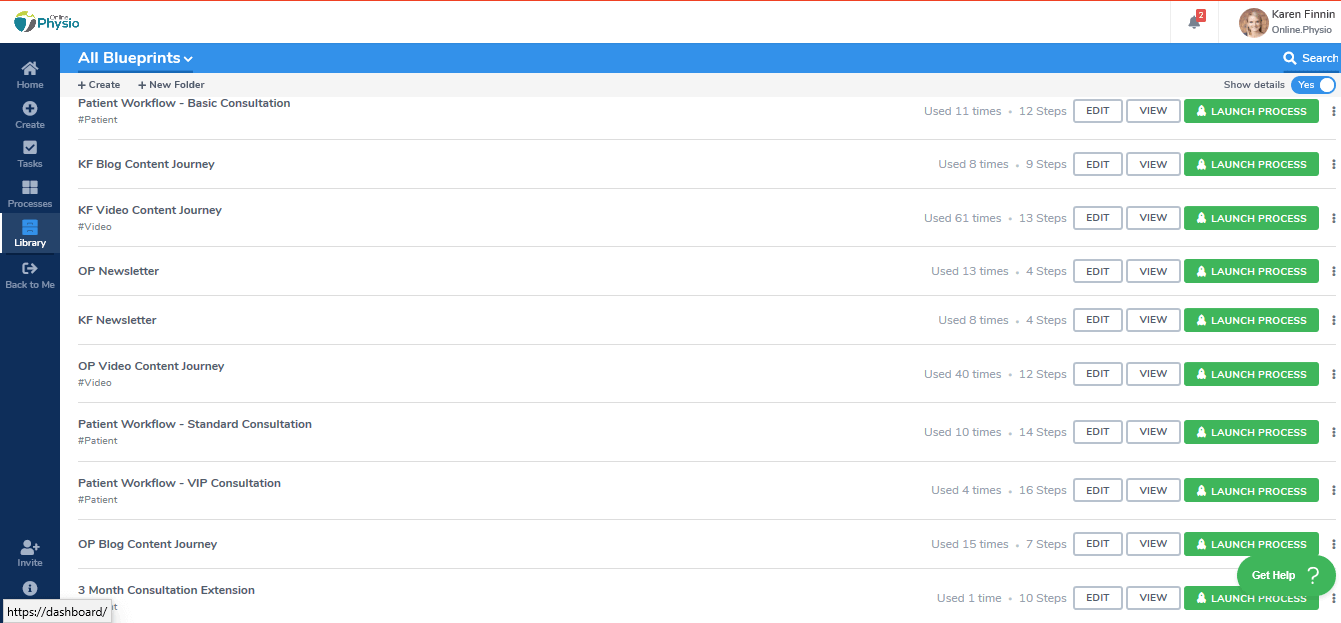
The goal was to equip staff with clear workflows that increase collaboration and productivity. With Tallyfy’s blueprints, every team member knows their tasks and deadlines before a process even launches.
Editing blueprints to match changing processes? Dead simple. Changes go live instantly across all future runs without any confusion. The entire team reads from the same script.
This is where the mega trend hits home - ** ** Online Physio got their processes right first. They documented every step, made assignments clear, and built in accountability. Only then did automation through Zapier triggers amplify what was already working. If they’d tried to automate a broken whiteboard system, they’d just have gotten broken results faster.
That’s something I see constantly in feedback we’ve received from healthcare teams. The ones who succeed with automation are the ones who fix the process before they automate it. The ones who fail? They try to use AI or automation as a band-aid over a fundamentally broken workflow. And then they wonder why the band-aid keeps falling off.
What caught us off guard was how much this reduced training time for new staff. Less hand-holding, more focus on doing the work.
How operations changed
Their project setup process used to be painful. A series of forms, a whiteboard, and about 10 post-it notes stuck to it. Within a few months, Tallyfy compressed all of that into one app.
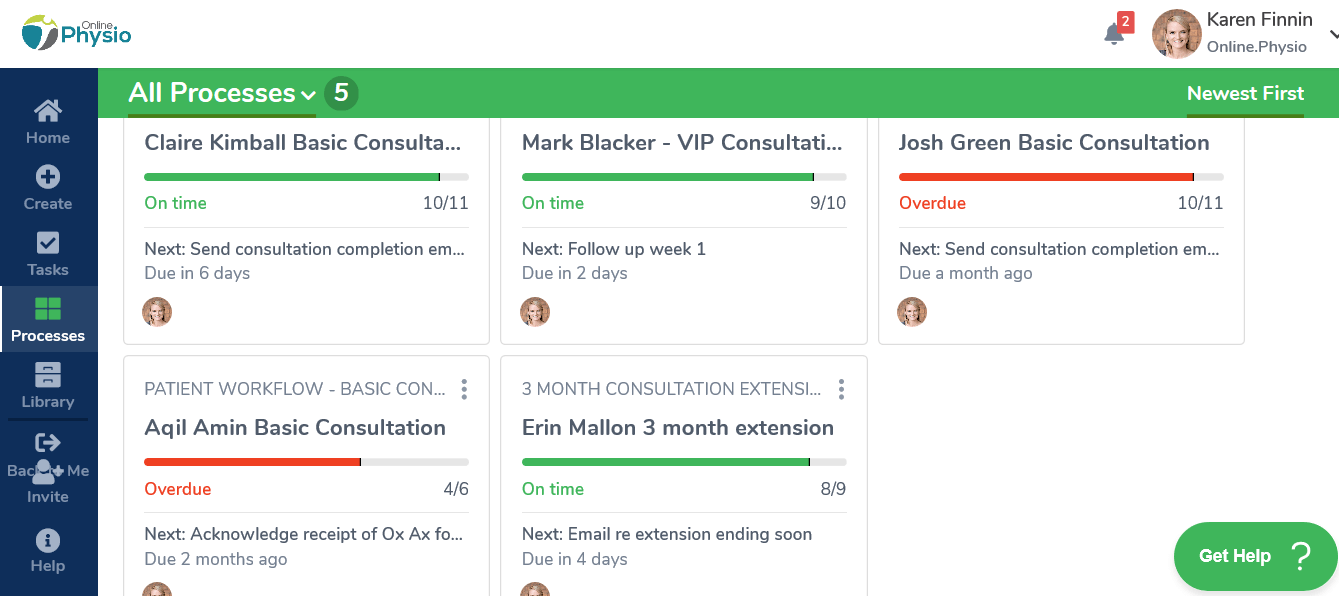
Accountability changed everything. We kept hearing the same thing from teams going through setup - the moment people get visibility into who owns what and how long it’s been sitting there, behavior shifts. That transparency alone transformed how the team operated.
My favorite part: the moment a task gets marked complete, another task opens up reminding the team to follow up. Nobody gets forgotten. Patients stay happy and loyal because the system won’t let things slip through the cracks.
In discussions we’ve had about healthcare process management, this pattern comes up repeatedly. It’s not the fancy features that make the difference - it’s the boring stuff. Automatic reminders. Clear ownership. Sequential task flow. The unsexy fundamentals that most tools ignore because they’re too busy building dashboards nobody looks at.
The NCBI’s research on organizational workflow describes characteristics of poorly functioning work processes: unnecessary pauses, rework, delays, established workarounds, and gaps where steps are often omitted. That was basically a description of Online Physio’s old system before Tallyfy.
At the end of the day, everything in a practice revolves around patient satisfaction and speed. The faster you deliver great care, the faster you can take on the next patient. Good workflow management helps with both.
What features mattered most
The Zapier integration was the turning point. Patient workflows trigger automatically when someone submits a webform. That single automation eliminated a pile of manual work that used to eat into clinical time.
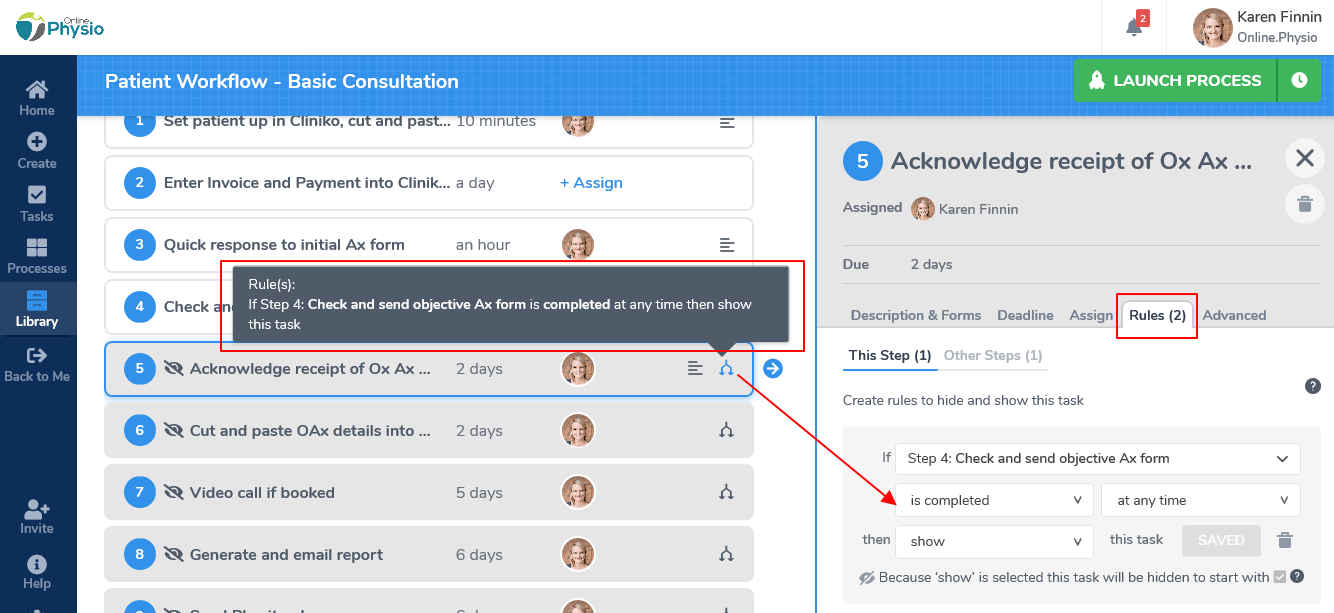
Blueprint features like different form field types, due dates, assigning tasks to team members or guests, and rules like sequential setup - these set the tool apart. They let Online Physio map their processes without second-guessing anything.
How Karen describes Tallyfy
Tallyfy is great for automating repeatable workflows, particularly patient workflows in a clinical environment. It’s perfect for people wanting to run and closely track routine but critical processes.
Would they recommend it?
Absolutely. Karen recommends Tallyfy to any business owner or manager who needs to track core processes like patient workflows closely. It’s a reliable, intuitive platform that handles complexity without making you feel lost.
Feedback we’ve received from healthcare providers across multiple specialties confirms the same thing - the combination of security, automation triggers, and multi-department task coordination addresses the unique compliance demands of clinical environments in ways that generic project tools simply can’t. Scheduling, triage, consent, documentation, billing - when these handoffs are disconnected, bottlenecks form at every junction. That’s where structured workflows make the real difference.
The bigger lesson
Karen Finnin went on to become Head of Performance Medicine at Cirque du Soleil. Online Physio itself is no longer accepting new patients. But the lesson from their workflow transformation sticks around.
You can’t automate chaos. You’ve got to define the process first, make it clear, make it accountable, and then let automation do the heavy lifting. That’s the sequence. Process first. Technology second.
I might be biased, but I think this is the single biggest mistake healthcare teams make with technology adoption. They buy the tool first and figure out the process later. It’s backwards. And it fails every time.
The teams that get this right - the ones who sit down, map every step, assign every handoff, and then automate - those are the ones who don’t need to switch tools every 18 months looking for a silver bullet that doesn’t exist.
About the Author
Amit is the CEO of Tallyfy. He is a workflow expert and specializes in process automation and the next generation of business process management in the post-flowchart age. He has decades of consulting experience in task and workflow automation, continuous improvement (all the flavors) and AI-driven workflows for small and large companies. Amit did a Computer Science degree at the University of Bath and moved from the UK to St. Louis, MO in 2014. He loves watching American robins and their nesting behaviors!
Follow Amit on his website, LinkedIn, Facebook, Reddit, X (Twitter) or YouTube.

Automate your workflows with Tallyfy
Stop chasing status updates. Track and automate your processes in one place.