
25 systems quotes that change how you see problems
W. Edwards Deming proved 85% of failures trace to the system, not the people. These 25 systems thinking quotes from Deming, Nassim Taleb, Peter Senge, and Donella Meadows reveal patterns others miss.
Systems thinking helps understand how processes interconnect.
Workflow Made Easy
Summary
- 85% of problems are system problems - Deming proved that most failures trace to the system, not the people. Stop blaming workers for process failures.
- Local optimization destroys global performance - Improving one part of a system often makes the whole system worse. See the whole before fixing the parts.
- Feedback loops determine behavior - Systems behave the way they do because of how their parts are connected. Change the connections, change the behavior.
- The obvious solution is usually wrong - Quick fixes create new problems. Systems thinking reveals interventions that actually work. Also see our collection of process improvement quotes for more on fixing broken systems.
- Antifragile systems get stronger from stress - Taleb, Meadows, Ackoff, and Senge show that the best systems don’t just survive disruption - they feed on it. See how Tallyfy applies systems thinking to workflow
Why systems thinking matters
Most people solve problems by looking at what’s broken and fixing it. Logical. Obvious. Usually wrong.
Systems thinkers see something different. They see how parts connect. How feedback loops amplify or dampen behavior. How fixing one thing breaks three others. How the obvious solution makes things worse.
From my years building workflow software at Tallyfy, I learned systems thinking the hard way, by implementing solutions that made problems worse. The software that automated a broken process. The incentive that created unintended behaviors. The fix that shifted the problem somewhere else.
One arts organization we worked with had a 160-page publication that required routing documents from department to department for review. The sequential handoffs created constant bottlenecks. When they mapped the system and enabled simultaneous review, turnaround dropped from over a week to 2-3 days. The people were fine. The system was the problem.
These quotes capture how systems thinkers see the world.
On the primacy of systems
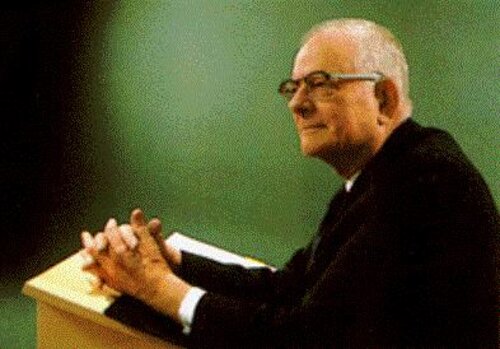
Statistician & Quality Management Pioneer
1900-1993
American engineer, statistician, and management consultant who taught Japanese manufacturers post-WWII quality methods. His 14 Points for Management and concept that 85% of problems are systemic transformed manufacturing worldwide.
Public domain, via Wikimedia Commons
A bad system will beat a good person every time.
- W. Edwards Deming
This is Deming’s most important insight. Hire the best people in the world. Put them in a bad system. They’ll fail.
The system determines performance more than the people in it. Fix the system, and performance improves. Blame the people, and nothing changes.
Eighty-five percent of the reasons for failure are deficiencies in the systems and process rather than the employee. The role of management is to change the process rather than badgering individuals to do better.
- W. Edwards Deming, Out of the Crisis (1986)
Deming calculated this from decades of statistical analysis. Only 15% of problems come from individual error. The rest come from how the system is designed.
This inverts how most companies handle problems. Instead of who messed up, ask what about the system allowed this to happen.
If you can’t describe what you are doing as a process, you don’t know what you’re doing.
- W. Edwards Deming
A system you can’t describe is a system you can’t improve. The act of describing a process forces clarity. It exposes assumptions, gaps, and invisible dependencies.
We built Tallyfy to make processes visible. When you can see the system, you can fix the system.
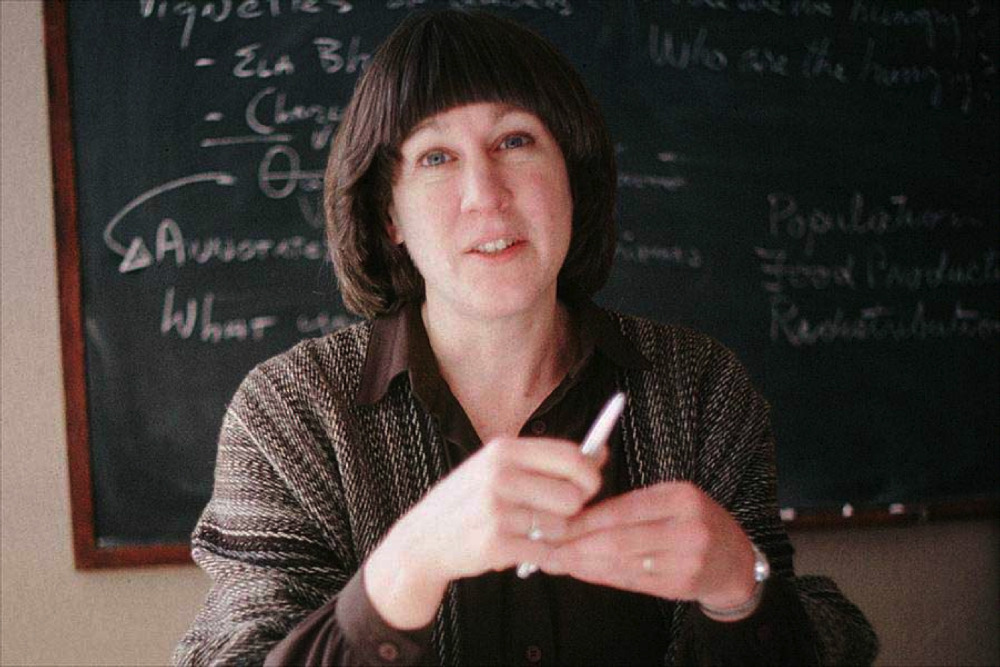
Systems Scientist & Author
1941-2001
American environmental scientist and systems analyst, lead author of 'The Limits to Growth.' Her work on systems thinking, particularly 'Thinking in Systems,' provides essential frameworks for understanding how complex organizations and processes actually behave.
Sustainability Institute, CC BY-SA 4.0, via Wikimedia Commons
Remember, always, that everything you know, and everything everyone knows, is only a model.
- Donella Meadows, Thinking in Systems (2008)
This one hits hard. Every org chart, every process map, every strategy deck - it’s a model. Not the territory. Meadows spent her career reminding us that our mental models of systems are always incomplete. The moment you confuse your map for the actual territory, you’re already making bad decisions.
I’ve watched teams at Tallyfy get stuck because they optimized for their model of the process instead of the actual process. There’s a difference.
We can’t impose our will on a system. We can listen to what the system tells us, and discover how its properties and our values can work together to bring forth something much better than could ever be produced by our will alone.
- Donella Meadows, Thinking in Systems (2008)
This is the hardest lesson in process improvement. You don’t wrestle a system into submission. You listen to it. You watch where it flows naturally and where it resists. Then you work with those forces, not against them.
Brute force redesigns fail. Collaborative redesigns stick.
On seeing connections

Creator of Theory of Constraints
1947-2011
Israeli business management guru who developed the Theory of Constraints. His novel 'The Goal' became one of the best-selling business books ever, teaching constraint management through storytelling.
Wikimedia Commons, CC BY-SA 3.0
An hour lost at a bottleneck is an hour lost for the entire system.
- Eliyahu Goldratt, The Goal (1984)
Goldratt’s Theory of Constraints is pure systems thinking. Every system has one constraint that limits output. Improve anything except the constraint, and you improve nothing.
Most companies optimize non-bottlenecks while ignoring the constraint. They get faster at waiting.
In our discussions with operations teams, this pattern surfaces constantly. A manufacturing company with 180 employees told us they wanted to use Tallyfy specifically to “understand where the bottlenecks are and improve the process.” Until you can see the constraint, you can’t fix it.
Tell me how you measure me, and I will tell you how I will behave.
- Eliyahu Goldratt
Measurement is a system intervention. Change what you measure, and you change behavior throughout the system. But measuring one thing often creates unintended consequences elsewhere.
Systems thinking asks: if we measure this, what will happen to everything else?
The goal is not to improve one measurement in isolation. The goal is to reduce operational expenses AND reduce inventories AND increase throughput simultaneously.
- Eliyahu Goldratt
Local optimization is the enemy of system performance. Improving one metric while ignoring others creates false progress. Real improvement improves the system as a whole.
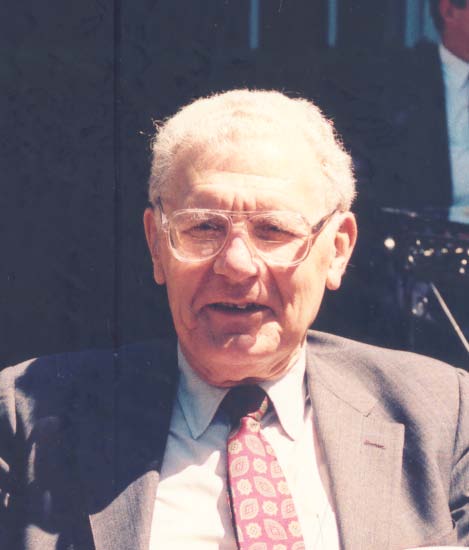
Pioneer of Systems Thinking in Management
1919-2009
American organizational theorist and pioneer of operations research who championed systems thinking in business. His critique of 'doing the wrong thing righter' and emphasis on dissolving rather than solving problems influenced generations of management thinkers.
Wharton School, Fair use for educational purposes
A system is never the sum of its parts; it’s the product of their interaction.
- Russell Ackoff
Read that again. Not the sum. The product of their interaction. Ackoff nailed something most managers miss entirely - you can have the best people, the best tools, the best intentions, and still produce garbage if the interactions between them are broken.
This is why I’m skeptical of “best practices” imported from other companies. The practice worked there because of how it interacted with everything else there. Rip it out and drop it into your system? Different interactions. Different results.
The more efficient you are at doing the wrong thing, the wronger you become. It is much better to do the right thing wronger than the wrong thing righter.
- Russell Ackoff
My favorite Ackoff quote. Maybe my favorite systems thinking quote, period. Most companies spend enormous energy getting faster at things that shouldn’t exist in the first place. Automating a bad process just produces bad outcomes faster.
I learned this the hard way at Tallyfy this pattern constantly. Teams come to us wanting to speed up a workflow. We ask them to map it first. Half the steps shouldn’t be there at all.
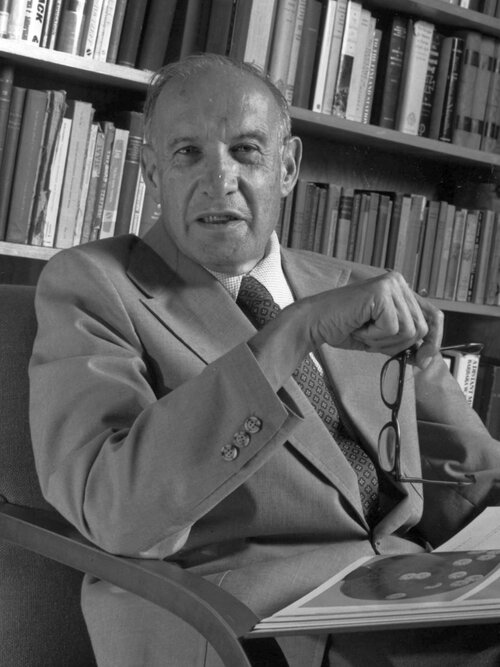
Management Consultant & Author
1909-2005
Austrian-American management consultant widely regarded as the father of modern management. His writings on management theory influenced business practices across the world and helped establish management as a legitimate discipline.
Jeff McNeill, CC BY-SA 2.0, via Wikimedia Commons
There is nothing so useless as doing efficiently that which should not be done at all.
- Peter Drucker
Systems thinking asks: should this part of the system exist? Before optimizing a process, question whether the process should exist. Eliminating unnecessary work improves the system more than speeding it up.
The bottleneck is always at the top of the bottle.
- Peter Drucker
Drucker understood that system constraints often come from leadership. The decisions at the top shape what’s possible below. Systems thinking examines every level, including the top.
On feedback loops
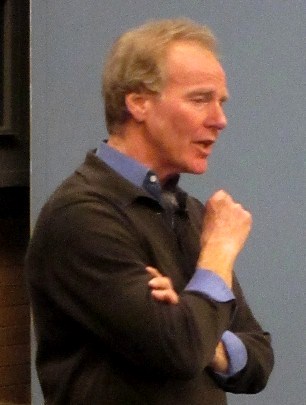
Author of The Fifth Discipline
1947-present
American systems scientist and senior lecturer at MIT Sloan School of Management. His book 'The Fifth Discipline' introduced the concept of the 'learning organization' and systems thinking as essential management disciplines for sustainable success.
MIT Sloan, CC BY-SA 4.0, via Wikimedia Commons
Structures of which we are unaware hold us prisoner. Once we can see them and name them, they no longer have the same hold on us.
- Peter Senge, The Fifth Discipline (1990)
Senge is talking about the invisible architecture of organizations. The unwritten rules. The feedback loops nobody drew on a whiteboard but everyone follows. These hidden structures shape behavior more than any org chart or policy manual ever will.
I think about this every time someone says “that’s just how we do things here.” That phrase is a prison. Name the structure. Draw it out. Then you can change it.
Business and human endeavors are systems. We tend to focus on snapshots of isolated parts of the system. And wonder why our deepest problems never get solved.
- Peter Senge, The Fifth Discipline (1990)
Snapshots. That’s what most dashboards give you. A frozen moment in time, ripped from its context. Senge’s point is that you can’t understand a system by staring at one frame. You need the whole movie - the flows, the delays, the feedback loops that connect one moment to the next.
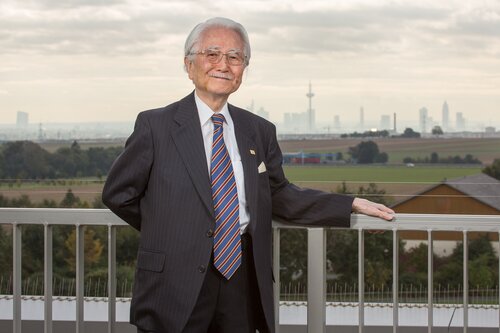
Founder of Kaizen Institute
1930-present
Japanese organizational theorist who introduced the concept of Kaizen (continuous improvement) to the Western world. His book 'Kaizen: The Key to Japan's Competitive Success' defined the philosophy of incremental, ongoing improvement.
Kaizen Institute, CC BY-SA 4.0, via Wikimedia Commons
Something is wrong if workers do not look around each day, find things that are tedious or boring, and then rewrite the procedures.
- Taiichi Ohno
Systems improve through feedback. The people inside the system see what’s broken. When they can feed that knowledge back into system design, improvement happens continuously.
Block the feedback, and the system stagnates.
Where there is no standard, there can be no kaizen.
- Masaaki Imai, Kaizen: The Key to Japan’s Competitive Success (1986)
Standards create reference points. Without them, you can’t tell if a change made things better or worse. Improvement requires measuring against a baseline.

CEO of Microsoft
1967-present
Indian-American CEO of Microsoft since 2014, credited with transforming the company's culture from competitive infighting to collaborative growth mindset. His leadership tripled Microsoft's market value.
Microsoft, CC BY-SA 4.0, via Wikimedia Commons
The learn-it-all does better than the know-it-all.
- Satya Nadella
Nadella introduced a growth mindset at Microsoft. Learning is a feedback loop. Know-it-alls close the loop. Learn-it-alls keep it open.
Organizations that learn continuously adapt their systems. Organizations that think they know stop improving.
On unintended consequences
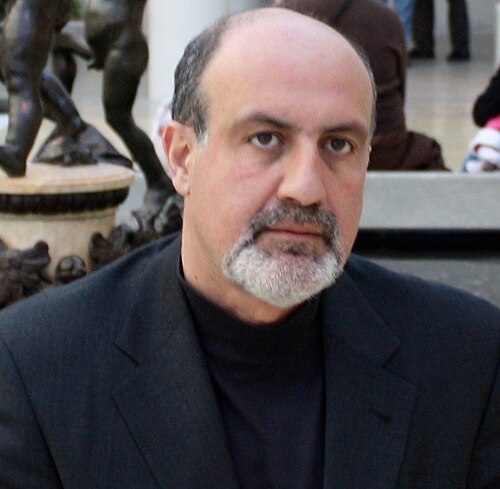
Author of The Black Swan & Antifragile
1960-present
Lebanese-American essayist and risk analyst whose books on uncertainty and randomness have influenced fields from finance to medicine. His concepts of 'Black Swans' and 'Antifragility' provide frameworks for building systems that benefit from disorder.
Bloomberg, Fair use for educational purposes
Wind extinguishes a candle and energizes fire. Likewise with randomness, uncertainty, chaos: you want to use them, not hide from them.
- Nassim Nicholas Taleb, Antifragile (2012)
Taleb’s concept of antifragility flipped how I think about systems. Most people design systems to be resilient - to withstand shocks. But the best systems don’t just survive stress. They get stronger from it. A candle dies in the wind. A fire grows.
The question isn’t “how do we prevent disruption?” It’s “how do we build systems that feed on disruption?” At Tallyfy, that means building workflows that surface problems instead of hiding them. Every exception is data. Every failure is a signal.
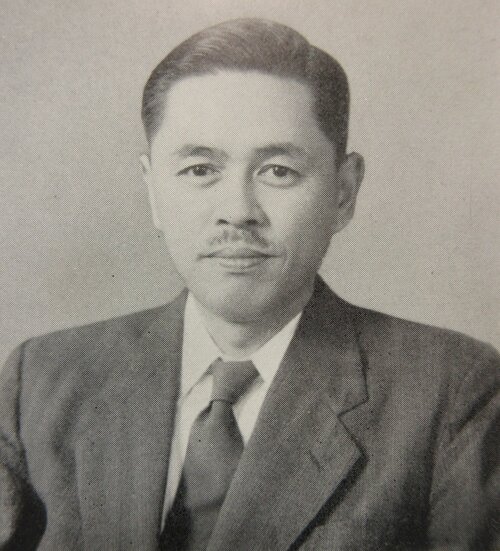
Father of the Toyota Production System
1912-1990
Japanese industrial engineer who developed the Toyota Production System, the foundation of Lean manufacturing. His innovations in just-in-time production and waste elimination revolutionized manufacturing globally.
Wikimedia Commons, CC BY-SA 4.0
All we are doing is looking at the time line, from the moment the customer gives us an order to the point when we collect the cash. And we are reducing that time line by removing the non-value-added wastes.
- Taiichi Ohno
Ohno focused on the whole timeline. Most companies optimize pieces. They speed up one step while slowing down three others. Systems thinking follows the entire flow.

CEO of Berkshire Hathaway
1930-present
American investor and CEO of Berkshire Hathaway, widely regarded as one of the most successful investors in history. Known for his long-term value investing philosophy and candid shareholder letters on business principles.
Mark Hirschey, CC BY-SA 2.0, via Wikimedia Commons
Chains of habit are too light to be felt until they are too heavy to be broken.
- Warren Buffett
Systems develop habits. Patterns of behavior that become invisible until they cause problems. By the time you notice them, they’re deeply embedded.
Systems thinking reveals these patterns early, before they calcify.
Only when the tide goes out do you discover who’s been swimming naked.
- Warren Buffett
Buffett is talking about financial risk, but the principle applies to systems. Growth hides systemic problems. Stress reveals them. Systems thinking looks for weaknesses before the tide goes out.
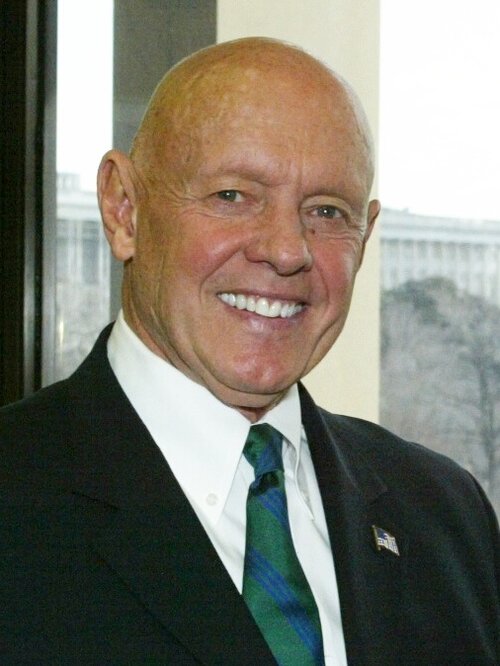
Author of The 7 Habits of Highly Effective People
1932-2012
American educator and author whose book 'The 7 Habits of Highly Effective People' sold over 40 million copies. His time management matrix distinguishing urgent from important work remains foundational to productivity thinking.
US Navy, Public domain, via Wikimedia Commons
Begin with the end in mind.
- Stephen Covey, The 7 Habits of Highly Effective People (1989)
Systems exist to achieve goals. When you lose sight of the goal, you optimize for the wrong things. Systems thinking starts with what the system is supposed to accomplish.
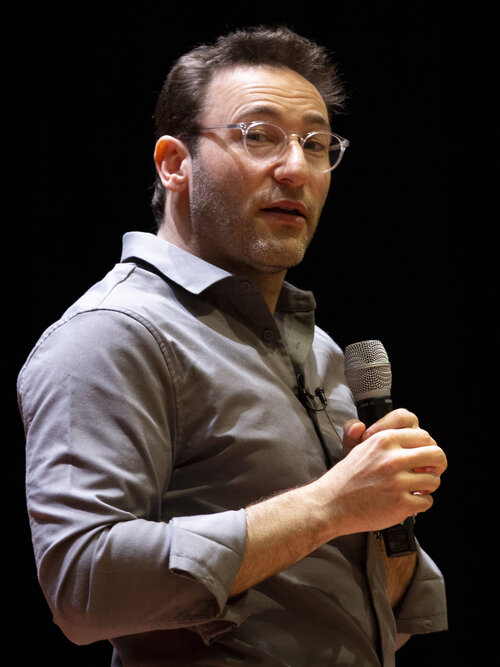
Author of Start With Why
1973-present
British-American author and motivational speaker best known for his concept of 'The Golden Circle' and the idea that great leaders 'start with why.' His TED talk is among the most-watched of all time.
US Marine Corps, Public domain, via Wikimedia Commons
A team is not a group of people who work together. It is a group of people who trust each other.
- Simon Sinek
Trust is a system property. It emerges from how people interact over time. You can’t install trust. You can only create conditions where trust develops.
Systems thinking recognizes that some outcomes emerge from relationships, not designs.

Author & Marketing Thought Leader
1960-present
American author and entrepreneur who has written 21 bestselling books on marketing, leadership, and change. Known for his daily blog and accessible insights on how businesses can thrive by being remarkable.
Joi Ito, CC BY 2.0, via Wikimedia Commons
The more we automate, the more we need people who think critically and creatively.
- Seth Godin
Automation changes system dynamics. When routine work is automated, human work shifts to exceptions and creativity. After watching hundreds of teams try this, the ones who thrive aren’t the ones who automated first - they’re the ones who redesigned their system first and then automated. Systems thinking anticipates these shifts.
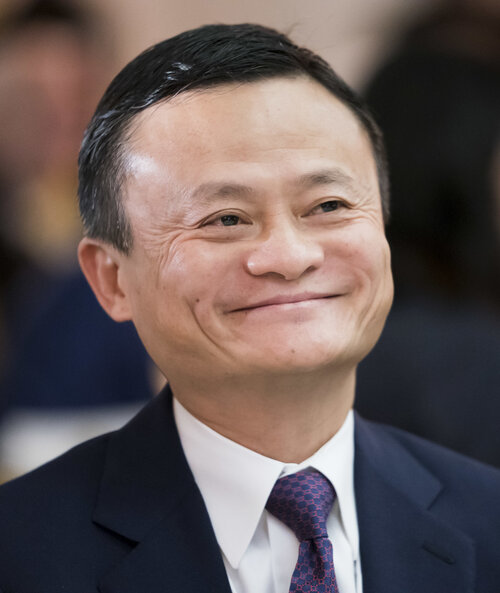
Co-founder of Alibaba Group
1964-present
Chinese entrepreneur who co-founded Alibaba Group, becoming one of the world's largest e-commerce companies. His insights on technology enabling rather than replacing human work shaped digital transformation thinking in Asia.
World Economic Forum, CC BY 2.0, via Wikimedia Commons
Today is hard, tomorrow will be worse, but the day after tomorrow will be sunshine.
- Jack Ma
Ma understood that systems change over time. Short-term and long-term dynamics differ. Systems thinking considers temporal patterns, not just current state.
How to think in systems
After years of learning to see systems, some principles have become clear:
Draw the boundaries carefully. What’s inside the system? What’s outside? Boundaries shape what you see and what you miss.
Follow the flows. Material, information, money, decisions - follow them through the system and watch where they speed up, slow down, get stuck.
Find the feedback loops. Reinforcing loops amplify. Balancing loops stabilize. Every system behavior traces to feedback structure.
Question the goal. Systems optimize for their goals, so if the system produces bad outcomes, check whether the goal is what you think it is.
Beware quick fixes. The obvious solution often makes things worse - look for interventions that change structure, not just symptoms.
See delays. Effects are rarely immediate. Today’s actions produce tomorrow’s consequences. Systems thinking accounts for time.
These principles shaped how we built Tallyfy. We see workflows as systems. Connected parts. Feedback loops. Flows and constraints. When you understand the system, you can improve it. When you only see the parts, you optimize in circles.
Because the goal isn’t faster tasks. The goal is better systems that produce better outcomes.
About the Author
Amit is the CEO of Tallyfy. He is a workflow expert and specializes in process automation and the next generation of business process management in the post-flowchart age. He has decades of consulting experience in task and workflow automation, continuous improvement (all the flavors) and AI-driven workflows for small and large companies. Amit did a Computer Science degree at the University of Bath and moved from the UK to St. Louis, MO in 2014. He loves watching American robins and their nesting behaviors!
Follow Amit on his website, LinkedIn, Facebook, Reddit, X (Twitter) or YouTube.

Automate your workflows with Tallyfy
Stop chasing status updates. Track and automate your processes in one place.