
Systemizing your business means pulling every process out of your head and into a system your team can follow without you. Here’s how we help teams build repeatable workflows.
Summary
- A brain tumor diagnosis forced total systemization in 6 weeks - Andrew Hurrell had to structure every operation at his UK digital marketing agency so his team could run everything without him present
- Google Sheets and CRM task tracking were failing - Things got missed constantly because spreadsheets don’t enforce accountability or track who’s doing what and when
- Structured templates replaced chaos for onboarding, cancellations, and check-ins - The agency created repeatable workflows for every recurring process, from welcoming new team members to 30/60/90/120-day account reviews
- The business thrived during his absence - With processes documented and running in Tallyfy, the team worked at full potential and outsourced confidently. See how Tallyfy helps agencies systemize
Workflow Made Easy
Get Customers Fast - A full service digital marketing agency based in England that has helped hundreds of UK businesses get the most from the internet using proven marketing methods. Owner Andrew Hurrell shares how Tallyfy helped his agency survive and grow when he was diagnosed with a brain tumor.
Why systemizing became a matter of survival
At the end of November 2018, Andrew Hurrell got news nobody wants to hear. A brain tumor diagnosis. Everything shifted overnight.
His immediate thought wasn’t about treatment or second opinions. It was about his business. What happens when the person who holds every process, every relationship, every unwritten rule in their head can’t be there anymore? Who picks up the slack? Who even knows what the slack looks like?
In our conversations with agency owners over the years, we’ve heard this fear again and again. Not always a medical emergency - sometimes it’s burnout, a vacation where your phone won’t stop buzzing, or just that wall where you can’t grow because you’re the bottleneck for everything. The trigger is different every time. The root cause is always the same: tribal knowledge trapped inside one person’s brain.
Andrew realized he had 6 weeks. That’s it. Six weeks to pull every operation out of his head and into a system his team could follow without him. Not six months of planning. Not a consultant engagement. Six weeks, starting now.
Tallyfy has been my saving grace, it is amazing!
- Andrew Hurrell, Director, Get Customers Fast
And here’s what makes this story worth telling years later. He didn’t just survive. The business got better. His team worked more independently, outsourced with confidence, and productivity went up because people finally knew exactly what they were supposed to be doing. No more guessing. No more “let me ask Andrew.”
The tumor? Benign. Andrew wrote about his experience in early January 2019, sharing the wonderful news that he’d be around for years to come. But the systemization he’d been forced into became permanent. Because once you see how much smoother things run with documented processes, you don’t go back to chaos.
What was broken before
The agency was running on Google Sheets and CRM task assignments. If you’ve ever tried to manage recurring processes inside a spreadsheet, you know how that goes. Things get missed. Nobody knows which version is current. There’s no accountability trail - just a growing sense of dread every Monday morning.
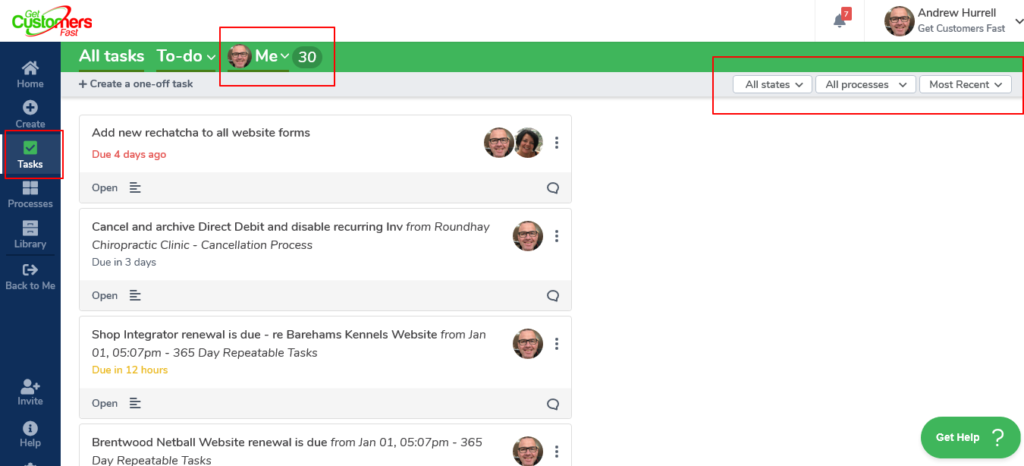
CRMs are built for tracking conversations and deals. They’re good at that. But they don’t tell you what work needs to happen after you win a new account. They don’t outline the actual steps or track whether those steps are getting done on time. There’s a gap between “winning work” and “delivering work” that most agencies never close properly.
Andrew needed something different - a dedicated process management tool that would trigger and track work for every new project without reinventing the wheel each time.
What surprised us when we dug into the data with workflow automation, this delivery gap is where most agencies fall apart. The sales process gets polished because it directly generates revenue. But the delivery process? That runs on tribal knowledge and heroic individual effort until something breaks. And something always breaks.
The processes they built in Tallyfy
Within those 6 weeks, Andrew created templates in Tallyfy for every recurring operation:
- Welcome onboard process for new team members
- Account onboarding process for new business
- Cancellation process
- Repeatable check-in tasks at day 30, 60, 90, and 120 for each account
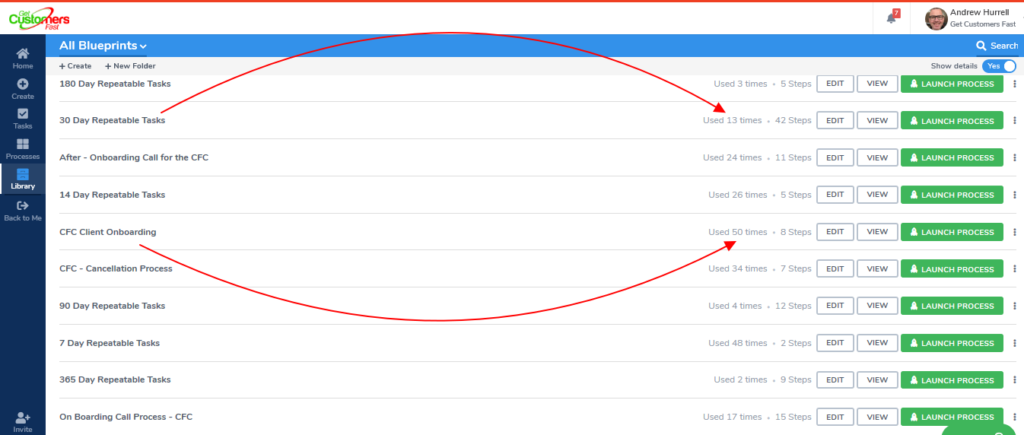
That last one is particularly smart. Most agencies handle account health reactively - they notice a problem when someone complains or churns. Building structured check-ins at regular intervals means you catch issues early. It’s the kind of proactive system that separates agencies retaining accounts long-term from those constantly hunting for replacements.
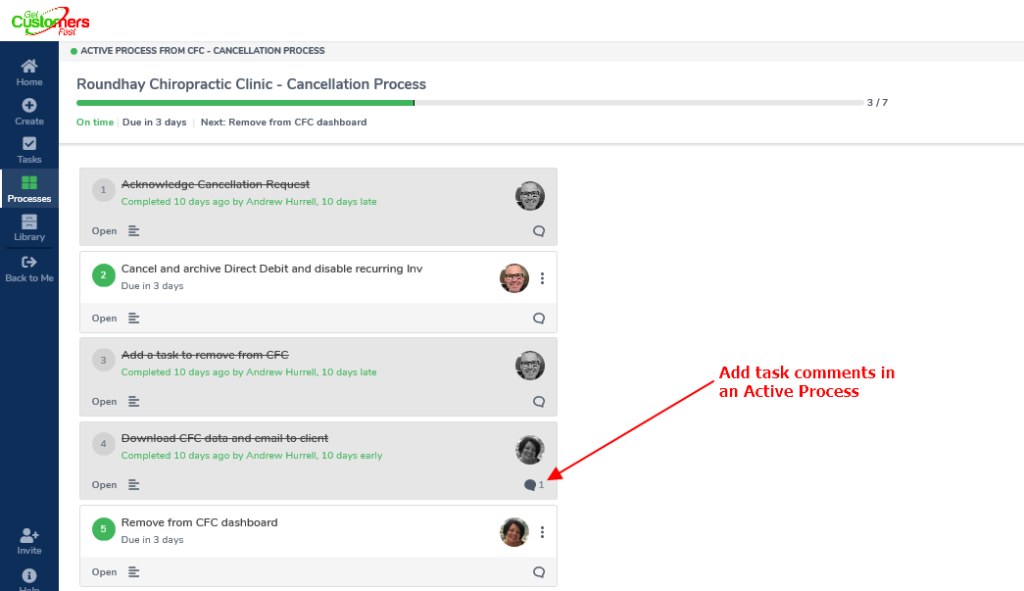
This pattern - taking recurring work and turning it into a template anyone can follow - is the foundation of systemization. You don’t need a six-month consulting engagement to do it. Pick your most repeated process. Document the steps. Assign ownership. Then do it again for the next one. That’s really all there’s to it.
Why process definition matters even more in the age of AI
Here’s a mega trend I keep coming back to:
Every agency, every operations team, every mid-size company is now thinking about AI tools - content generation, ad optimization, reporting automation. The promise is speed. But if you feed AI into a broken process, you just get broken results faster. And at higher volume. Which is worse than slow and broken, because now you’ve got a machine cranking out mistakes at scale.
The agency that systemized first and then layered on technology will always outperform the one that bought every AI tool on the market while still running operations through spreadsheets and Slack messages. I’m convinced of this. We’ve seen it play out at Tallyfy across hundreds of implementations - organizations that define their processes first, then automate, see productivity gains within weeks. Those that try to automate undefined processes spend months wondering why nothing works.
Andrew’s story is from 2019, but it’s more relevant now than ever. The agencies that documented their processes years ago are the ones successfully adopting AI today. They have the structured workflows that AI agents need to operate effectively. Without that foundation, you’re just adding chaos on top of chaos.
The sequential pattern matters. Document. Track. Then automate. Skipping straight to automation is like trying to build the second floor of a house without the first.
The impact on his team
A few weeks into systemization, Andrew could already see the difference.
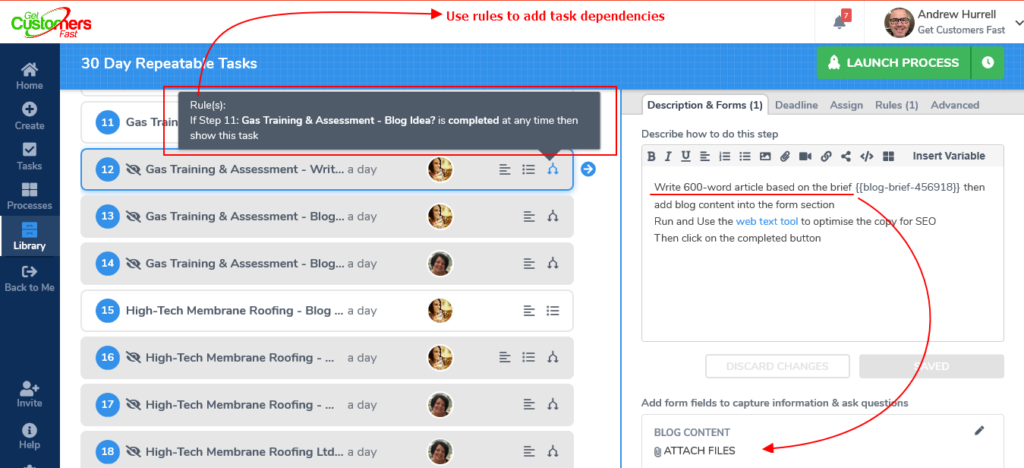
His team could work independently. They knew exactly what tasks and actions they should be completing, and at what time and date. No more checking in constantly. No more guessing. No more “I thought you were handling that.”
And outsourcing became possible. Think about that for a second. Before systemization, bringing on external help was risky because you couldn’t explain how things should be done. After? You hand someone a template. They follow the steps. Done.
Tallyfy has completely systemized my business. Tallyfy can help anyone turn any job into a repeatable process, so you do not have to be there 24/7 to describe and guide what should be done. You can finally outsource work with confidence and focus on growing the business.
- Andrew Hurrell, Director, Get Customers Fast
What Andrew described there’s the real unlock of systemization. It’s not about control - it’s about freedom. Freedom to be absent without everything falling apart. Freedom to delegate without worrying. Freedom to grow without being the bottleneck.
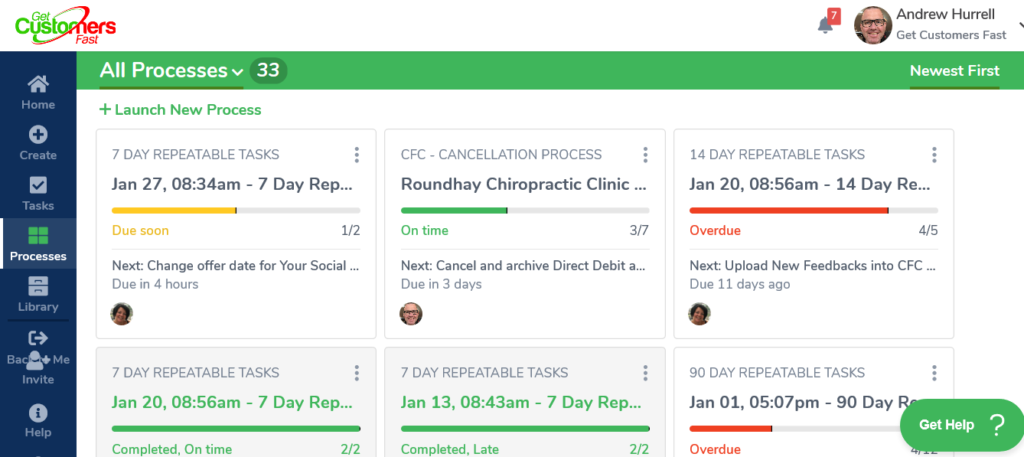
The dashboard visibility was his favorite feature. One view showing all ongoing processes and who’s doing what. Compare that to digging through spreadsheets and CRM entries to piece together status updates. Night and day.
How to start systemizing your own business
Andrew’s story is dramatic because of the circumstances, but the approach works regardless of your situation. You don’t need a health scare to recognize that undocumented processes are a liability. They just are. Every business owner knows this somewhere in the back of their mind but keeps putting it off because “things are working fine.” Until they aren’t.
Here’s how to start. Pick your most painful recurring process - the one where things get missed, where new hires struggle, where you find yourself explaining the same steps over and over. Document it. Not in a Word doc that nobody reads - in a workflow tool where steps get assigned, tracked, and completed.
Common starting points based on feedback we’ve received from operations teams:
Onboarding - Whether it’s new team members or new accounts, onboarding has clear steps that repeat every time. It’s also where first impressions get made, which means getting it wrong has a real cost.
Regular check-ins - Like Andrew’s 30/60/90/120-day reviews. Any recurring touchpoint that should happen on a schedule but somehow doesn’t. These are the first things to slip when people get busy, and they’re exactly the things that prevent churn.
Offboarding and cancellations - Most businesses have an informal cancellation process at best. Structuring it ensures you collect feedback, handle handoffs properly, and maintain professional relationships even when someone’s leaving.
The biggest mistake I see? Trying to systemize everything at once. Andrew did 6 weeks because he had to. You probably have more time. Start with one process. Get it running. Then add the next one. Momentum matters more than perfection here.
Everyone should be thinking about systemizing their business, it is the only way to grow. I would definitely recommend Tallyfy to business owners who would like to outsource work, to senior management who have staff working under them or anyone responsible for growth of their organization.
- Andrew Hurrell, Director, Get Customers Fast
What this story proves seven years later
A lot of business advice is theoretical. “You should systemize!” Great. Thanks. That and two dollars gets you a coffee.
Andrew’s story cuts through that because he didn’t have the luxury of procrastination. He had a deadline - literally - and he proved that a small agency could document its entire operation in 6 weeks using Tallyfy’s workflow templates. No consultants. No massive software rollout. Just one person with urgency and the right tool.
The business survived his absence. The tumor was benign. And the systems he built under pressure became the foundation for growth he couldn’t have imagined at the time.
That’s the real lesson here. Most businesses wait for a crisis to systemize. The smart ones do it before the crisis arrives. Because when the pressure hits - a key person leaves, demand spikes, you need to scale fast - the only businesses that survive are the ones where the process lives in the system, not in someone’s head. I’ve watched this pattern repeat across every industry we’ve worked in at Tallyfy. The organizations that invest in process documentation before they desperately need it are always the ones still standing when things get rough.
Don’t wait for your six-week deadline. Start now. Pick one process. Document it. Run it. Then do the next one.
Tallyfy is cloud-based and incredibly easy to use. Tallyfy pushes out improvements and new features at regular intervals which is a great comfort. The support is really great, they all seem to be the experts in this industry.
- Andrew Hurrell, Director, Get Customers Fast
