
18 scaling quotes from founders who actually grew companies
Scaling advice from consultants who never built anything is worthless. These quotes come from founders and operators who lived through the chaos of growth.
Scaling requires systems that grow with you. Here is how we approach workflow management for scaling businesses.
Workflow Made Easy
Summary
- What got you here won’t get you there - The scrappy tactics that worked at 10 people break at 100. Every growth stage requires new approaches.
- Process isn’t bureaucracy at scale - The companies that resist process at 50 people are drowning by 200. Structure enables growth.
- Scaling people is harder than scaling systems - You can add servers overnight. Developing leaders takes years.
- Growth exposes every weakness - Whatever’s slightly broken at small scale becomes catastrophically broken at large scale. See how Tallyfy scales with your business
Why does scaling break everything that used to work?
Scaling sounds exciting. The reality is mostly painful.
Everything that worked stops working. The founder who knew every customer can’t remember their names. The team that communicated by walking across the room now needs meetings. The flexibility that made you fast becomes the chaos that slows you down.
After watching hundreds of teams try this, I’ve seen companies scale and companies implode trying. The difference is rarely strategy. It’s whether they evolved their operations to match their growth.
One e-commerce company we work with identified this early. They mapped their product launch and inventory audit processes when they had just 4 employees. Their operations manager told us: “We’ve seen clarity of the process and communication with the team, as well as any bottlenecks.” They’ve since launched multiple new product lines without adding operational chaos.
These quotes capture what scaling actually requires.
On the nature of growth

CEO of Berkshire Hathaway
1930-present
American investor and CEO of Berkshire Hathaway, widely regarded as one of the most successful investors in history. Known for his long-term value investing philosophy and candid shareholder letters on business principles.
Mark Hirschey, CC BY-SA 2.0, via Wikimedia Commons
Only when the tide goes out do you discover who’s been swimming naked.
- Warren Buffett
Growth covers problems. Revenue hides inefficiency. New customers mask retention issues. When growth slows, even briefly, every hidden problem becomes visible.
The companies that scale sustainably are the ones that fix problems during growth, not just when they’re forced to.
Someone’s sitting in the shade today because someone planted a tree a long time ago.
- Warren Buffett
The scaling you experience today was set up years ago. The habits, the systems, the people you developed create the foundation for growth. Companies that neglect this work hit walls. Running Tallyfy taught us that the teams who invest in their processes early don’t just grow faster — they grow with far less pain.

Co-founder of Microsoft
1955-present
American business magnate who co-founded Microsoft and led it to become the world's largest PC software company. Now focused on philanthropy, his insights on automation and technology adoption remain influential.
DFID - UK Department for International Development, CC BY 2.0, via Wikimedia Commons
We always overestimate the change that will occur in the next two years and underestimate the change that will occur in the next ten.
- Bill Gates
Scaling happens slower than you expect, then faster than you can handle. The companies that survive both phases are the ones that build capacity ahead of demand.

Co-founder of Alibaba Group
1964-present
Chinese entrepreneur who co-founded Alibaba Group, becoming one of the world's largest e-commerce companies. His insights on technology enabling rather than replacing human work shaped digital transformation thinking in Asia.
World Economic Forum, CC BY 2.0, via Wikimedia Commons
Today is hard, tomorrow will be worse, but the day after tomorrow will be sunshine.
- Jack Ma
Ma built Alibaba through repeated near-death experiences. Scaling isn’t linear. It includes periods of intense difficulty. The companies that give up in the hard times never see the sunshine.
Stop thinking like a startup
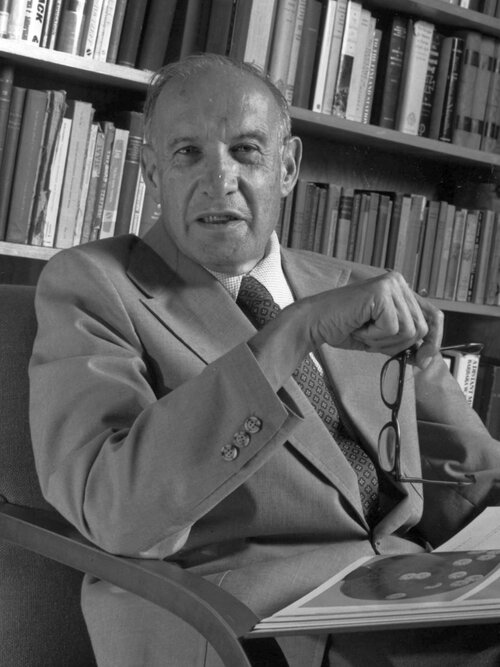
Management Consultant & Author
1909-2005
Austrian-American management consultant widely regarded as the father of modern management. His writings on management theory influenced business practices across the world and helped establish management as a legitimate discipline.
Jeff McNeill, CC BY-SA 2.0, via Wikimedia Commons
The entrepreneur always searches for change, responds to it, and exploits it as an opportunity.
- Peter Drucker
What makes entrepreneurs successful early on, the ability to pivot rapidly, becomes dangerous at scale. At some point, you need stability. The transition’s hard for founders who only know scrappiness.
Management is doing things right; leadership is doing the right things.
- Peter Drucker
Early-stage companies need leadership: finding the right things to do. Scaling companies need management: doing those things right, repeatedly, at volume. Most founders don’t realize when to make that shift.

Co-founder of Slack
1973-present
Canadian entrepreneur who co-founded Flickr and Slack. His philosophy on workplace communication and automation shaped how modern teams collaborate, emphasizing that automation should eliminate drudgery, not replace creativity.
Web Summit, CC BY 2.0, via Wikimedia Commons
Every company that grows will become more and more mediocre unless they fight hard against it.
- Stewart Butterfield
Butterfield built Slack and watched it scale. Mediocrity is the default outcome. Fighting it requires intentional effort to maintain quality and culture as you grow. But how many companies actually budget for that fight?

CEO of Microsoft
1967-present
Indian-American CEO of Microsoft since 2014, credited with transforming the company's culture from competitive infighting to collaborative growth mindset. His leadership tripled Microsoft's market value.
Microsoft, CC BY-SA 4.0, via Wikimedia Commons
Hit refresh on individual mindset, on company culture, on products.
- Satya Nadella (paraphrased from Hit Refresh, 2017)
Nadella took over a Microsoft that had stopped growing and made it grow again. Sometimes scaling requires hitting refresh on everything. Not abandoning what works, but evolving it. That’s a distinction most leaders miss.
On building systems that scale

Creator of Theory of Constraints
1947-2011
Israeli business management guru who developed the Theory of Constraints. His novel 'The Goal' became one of the best-selling business books ever, teaching constraint management through storytelling.
Wikimedia Commons, CC BY-SA 3.0
An hour lost at a bottleneck is an hour lost for the entire system.
- Eliyahu Goldratt, The Goal (1984)
At small scale, bottlenecks are inconveniences. At large scale, they are existential threats. What slows you down a little at 20 people may completely block you at 200.
Find your bottlenecks before they find you.
A professional services firm we spoke with discovered this through pain. Their 7-person team had client-facing processes scattered across emails, phone calls, and spreadsheets. They trained their first client on a shared workflow system in under 20 minutes. The client’s response: “I can so do this.” That moment of simplicity is what scaling requires.
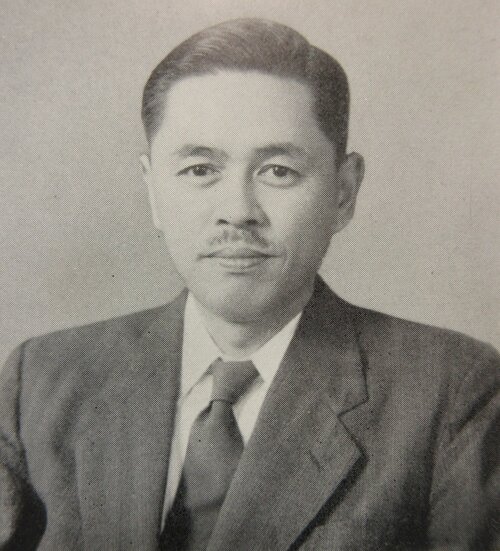
Father of the Toyota Production System
1912-1990
Japanese industrial engineer who developed the Toyota Production System, the foundation of Lean manufacturing. His innovations in just-in-time production and waste elimination revolutionized manufacturing globally.
Wikimedia Commons, CC BY-SA 4.0
All we are doing is looking at the time line, from the moment the customer gives us an order to the point when we collect the cash. And we are reducing that time line by removing the non-value-added wastes.
- Taiichi Ohno
Scaling isn’t adding more. It’s removing waste so what you have works faster. Every unnecessary step, every redundant approval, every pointless meeting accumulates as you grow.
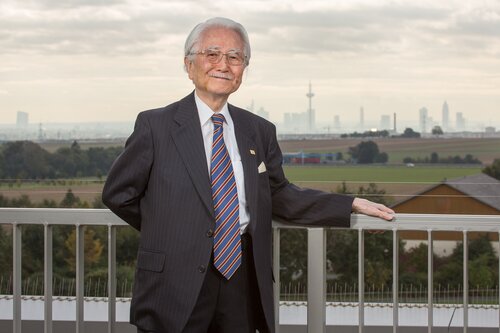
Founder of Kaizen Institute
1930-present
Japanese organizational theorist who introduced the concept of Kaizen (continuous improvement) to the Western world. His book 'Kaizen: The Key to Japan's Competitive Success' defined the philosophy of incremental, ongoing improvement.
Kaizen Institute, CC BY-SA 4.0, via Wikimedia Commons
Where there is no standard, there can be no kaizen.
- Masaaki Imai, Kaizen: The Key to Japan’s Competitive Success (1986)
Startups hate standardization. It feels like bureaucracy. But without standards, you can’t scale. Every person doing things differently creates chaos that multiplies with growth.
We built Tallyfy to create standards that don’t feel bureaucratic. Processes that guide without constraining.
On the people side of scaling
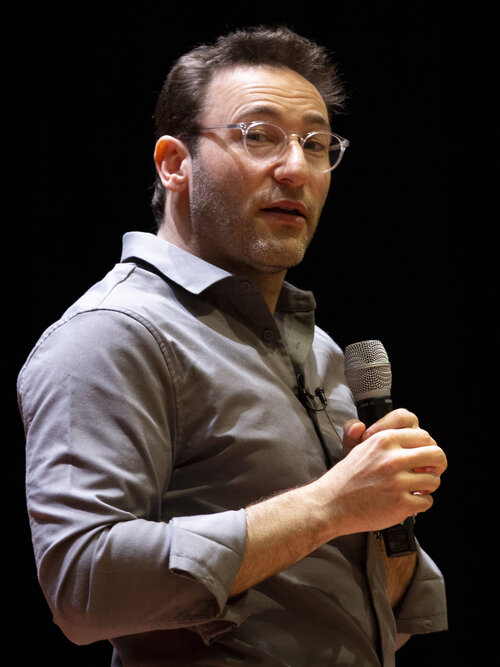
Author of Start With Why
1973-present
British-American author and motivational speaker best known for his concept of 'The Golden Circle' and the idea that great leaders 'start with why.' His TED talk is among the most-watched of all time.
US Marine Corps, Public domain, via Wikimedia Commons
A team is not a group of people who work together. It is a group of people who trust each other.
- Simon Sinek
Small teams build trust naturally through constant interaction. Scaled teams need to build trust deliberately. Without it, growth creates silos and politics. That’s where most scaling efforts quietly die.
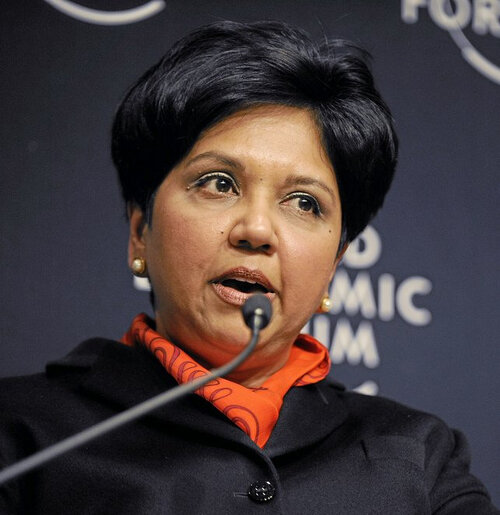
Former CEO of PepsiCo
1955-present
Indian-American businesswoman who served as CEO of PepsiCo from 2006 to 2018. Her 'Performance with Purpose' strategy integrated social responsibility with business performance, demonstrating that values and profits can coexist.
World Economic Forum, CC BY-SA 2.0, via Wikimedia Commons
The distance between number one and number two is always a constant. If you want to improve the organization, you have to improve yourself.
- Indra Nooyi
Scaling requires leaders who scale themselves. The skills that made you successful at one stage are different from what you need at the next. Personal growth enables organizational growth.

Former COO of Meta
1969-present
American businesswoman who served as COO of Meta (Facebook) from 2008 to 2022. Her book 'Lean In' sparked global conversations about women in leadership, and her work on resilience after tragedy influenced how leaders discuss vulnerability.
World Economic Forum/James Tamim, CC BY-SA 2.0, via Wikimedia Commons
Done is better than perfect.
- Sheryl Sandberg, Lean In (2013)
Perfectionism kills scaling. At some point, you need to ship, hire, decide, and move on. The companies that wait for perfect never grow. They just polish endlessly.
Co-founder of Alibaba Group
1964-present
Chinese entrepreneur who co-founded Alibaba Group, becoming one of the world's largest e-commerce companies. His insights on technology enabling rather than replacing human work shaped digital transformation thinking in Asia.
World Economic Forum, CC BY 2.0, via Wikimedia Commons
Hire people who are smarter than you.
- Jack Ma
Founders who only hire people they can manage directly hit ceilings. Scaling requires hiring people who are better than you at specific things, then getting out of their way. It’s uncomfortable, but it’s the only way.
On maintaining culture during growth
CEO of Microsoft
1967-present
Indian-American CEO of Microsoft since 2014, credited with transforming the company's culture from competitive infighting to collaborative growth mindset. His leadership tripled Microsoft's market value.
Microsoft, CC BY-SA 4.0, via Wikimedia Commons
The learn-it-all does better than the know-it-all.
- Satya Nadella
Nadella used this phrase to transform Microsoft’s culture. Companies that scale successfully maintain learning cultures. Know-it-all cultures become rigid and can’t adapt.

Author & Marketing Thought Leader
1960-present
American author and entrepreneur who has written 21 bestselling books on marketing, leadership, and change. Known for his daily blog and accessible insights on how businesses can thrive by being remarkable.
Joi Ito, CC BY 2.0, via Wikimedia Commons
A tribe is a group of people connected to one another, connected to a leader, and connected to an idea.
- Seth Godin, Tribes (2008)
Culture at scale requires shared connection. Not just to leadership, but to the idea that brings everyone together. When the idea gets lost, the tribe fragments. That’s not a theory — it’s what we’ve watched happen.
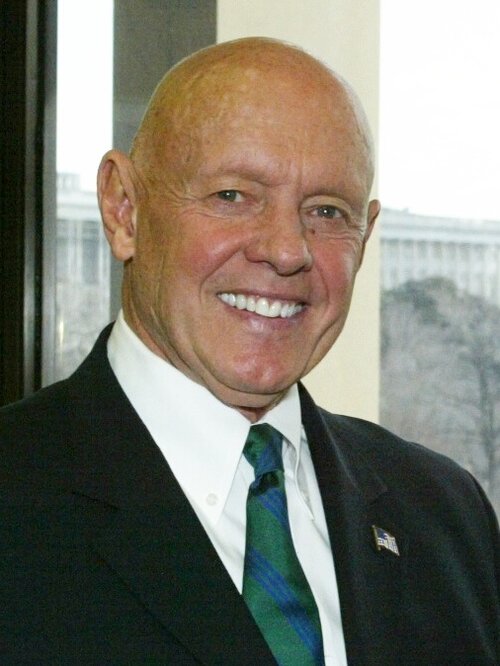
Author of The 7 Habits of Highly Effective People
1932-2012
American educator and author whose book 'The 7 Habits of Highly Effective People' sold over 40 million copies. His time management matrix distinguishing urgent from important work remains foundational to productivity thinking.
US Navy, Public domain, via Wikimedia Commons
The main thing is to keep the main thing the main thing.
- Stephen Covey
Scaling creates distractions. New opportunities, new challenges, new fires. The companies that scale well maintain focus on what matters. The main thing stays the main thing despite the noise.
What actually enables scaling
After working with companies at different growth stages, the patterns are clear. Document before you need to — the process that lives in one person’s head becomes a crisis when that person is overwhelmed or leaves. Hire for where you’re going — the person perfect for a 20-person company may struggle at 200, so plan for the stage ahead. Build systems, not heroics — growth that depends on individual heroics doesn’t scale, but systems do. Maintain culture deliberately — culture happens by default, but the default at scale is mediocrity, so fight for the culture you want. Invest in leadership development — you can’t hire all the leaders you need, so grow them from within. Teams tell us the same thing in different words: they didn’t think they needed structure until growth forced the issue. Every single one wishes they’d started earlier.
These principles shaped how we built Tallyfy. Scaling requires systems that grow with you. Not rigid bureaucracy, but flexible structure that maintains clarity as complexity increases.
Because the goal isn’t just to grow. It’s to grow without breaking.
About the Author
Amit is the CEO of Tallyfy. He is a workflow expert and specializes in process automation and the next generation of business process management in the post-flowchart age. He has decades of consulting experience in task and workflow automation, continuous improvement (all the flavors) and AI-driven workflows for small and large companies. Amit did a Computer Science degree at the University of Bath and moved from the UK to St. Louis, MO in 2014. He loves watching American robins and their nesting behaviors!
Follow Amit on his website, LinkedIn, Facebook, Reddit, X (Twitter) or YouTube.

Automate your workflows with Tallyfy
Stop chasing status updates. Track and automate your processes in one place.