
20 delegation quotes that expose why leaders stay stuck
Most delegation advice sounds nice but fails in practice. These quotes from leaders who actually learned to let go reveal what delegation really requires.
Summary
- Delegation isn’t about trust, it’s about systems - The leaders who delegate well have processes that make delegation safe, not just faith in their people.
- Holding on to tasks kills your growth - Every task you refuse to delegate is a ceiling on your capacity and your company’s potential.
- Delegation without context is abdication - Just handing off work without the why and how isn’t delegation. It’s abandonment.
- The first delegation is always painful - It gets easier, but only if you push through the initial discomfort. See how Tallyfy makes delegation trackable
Why does everyone choke at delegation?
Everyone knows they should delegate more. Almost nobody does it well. Having worked with hundreds of teams through Tallyfy, I’ve watched this pattern play out repeatedly. The pattern is predictable. A leader gets promoted because they’re great at doing things. Now their job is getting others to do things. They’ve spent years developing skills they can’t use anymore. The skills they need, they’ve never practiced. In our experience with workflow automation, we’ve observed that operations teams at 50-200 employee companies struggle most with this transition - they built the business by doing everything themselves, and now they can’t let go.
Delegation isn’t intuitive. It feels wrong. Someone else will do it differently. Probably worse. Definitely slower at first. The short-term pain is real and visible. The long-term cost of not delegating is invisible until it’s too late.
That invisibility is what gets you.
These quotes capture the uncomfortable truth about delegation. The challenge is that delegation without visibility becomes abandonment. When you hand off work but have no way to track progress, you either micromanage or lose control entirely. Neither works.
Workflow Made Easy
Stop pretending delegation is optional
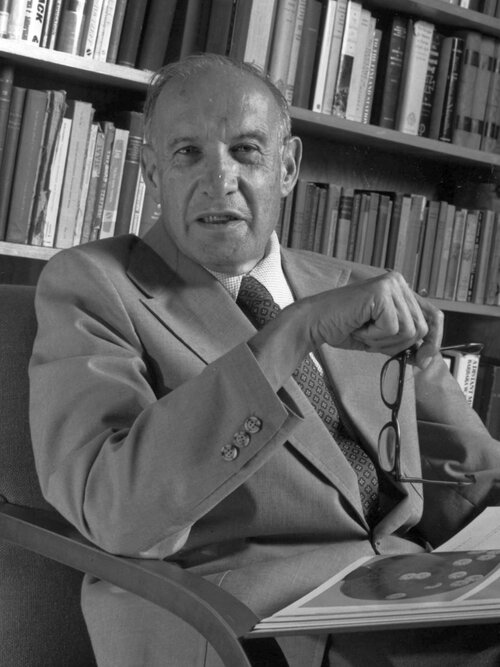
Management Consultant & Author
1909-2005
Austrian-American management consultant widely regarded as the father of modern management. His writings on management theory influenced business practices across the world and helped establish management as a legitimate discipline.
Jeff McNeill, CC BY-SA 2.0, via Wikimedia Commons
No executive has ever suffered because his subordinates were strong and effective.
- Peter Drucker
Drucker observed that insecure leaders hire weak people and keep them weak. Strong leaders hire strong people and make them stronger. Delegation is how you develop strength in others. The fear that someone will outshine you is backwards. Their success is your success. Their capability is your capacity.
Do what you do best and outsource the rest.
- Peter Drucker
This applies to individuals, not just companies. You have unique strengths. Everything else is a candidate for delegation. The trap is that you might be good at things that aren’t your best use of time. Being capable of a task doesn’t mean you should do it.

CEO of Berkshire Hathaway
1930-present
American investor and CEO of Berkshire Hathaway, widely regarded as one of the most successful investors in history. Known for his long-term value investing philosophy and candid shareholder letters on business principles.
Mark Hirschey, CC BY-SA 2.0, via Wikimedia Commons
Hire well, manage little.
- Warren Buffett
Buffett runs Berkshire Hathaway with a tiny corporate staff. Dozens of companies, hundreds of billions in revenue, minimal management overhead. His secret: hire exceptional leaders and let them run. This is delegation at scale. It requires hiring people you trust completely, then actually trusting them.
You only find out who is swimming naked when the tide goes out.
- Warren Buffett
Buffett’s talking about risk, but it applies to delegation. You only discover if delegation works when things get hard. The way to find out is to actually delegate, then observe.
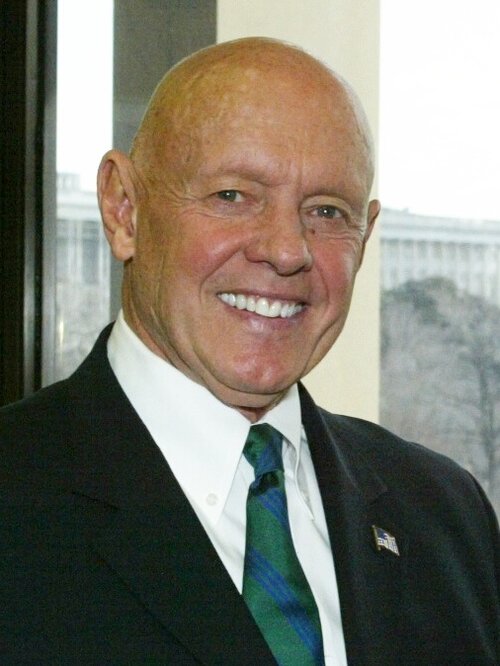
Author of The 7 Habits of Highly Effective People
1932-2012
American educator and author whose book 'The 7 Habits of Highly Effective People' sold over 40 million copies. His time management matrix distinguishing urgent from important work remains foundational to productivity thinking.
US Navy, Public domain, via Wikimedia Commons
The key is not to prioritize what’s on your schedule, but to schedule your priorities.
- Stephen Covey, The 7 Habits of Highly Effective People (1989)
If your priorities are buried under tasks you should delegate, they never get done. Delegation isn’t about dumping work. It’s about protecting time for what matters most.
Letting go without losing control
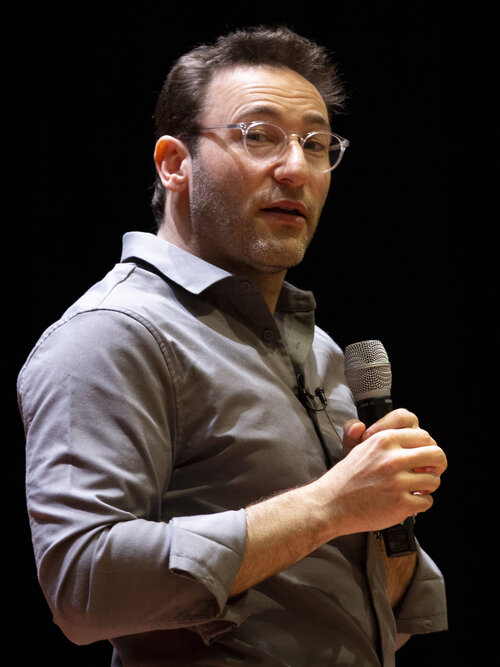
Author of Start With Why
1973-present
British-American author and motivational speaker best known for his concept of 'The Golden Circle' and the idea that great leaders 'start with why.' His TED talk is among the most-watched of all time.
US Marine Corps, Public domain, via Wikimedia Commons
A team is not a group of people who work together. It is a group of people who trust each other.
- Simon Sinek
Trust is the foundation of delegation. Without it, you’ll always feel the need to check, verify, and redo. Building trust takes time, but it’s the only path to real delegation.
Leadership is not about being in charge. It’s about taking care of those in your charge.
- Simon Sinek
When you fail to delegate, you’re not protecting your team. You’re limiting them. Taking care of people includes giving them challenges, responsibility, and the chance to grow.
If you want to go fast, go alone. If you want to go far, go together.
- African Proverb
Individual contributors can move fast. Leaders who can’t delegate hit walls. The distance you can travel is determined by how well you bring others along.

Former CEO of PepsiCo
1955-present
Indian-American businesswoman who served as CEO of PepsiCo from 2006 to 2018. Her 'Performance with Purpose' strategy integrated social responsibility with business performance, demonstrating that values and profits can coexist.
World Economic Forum, CC BY-SA 2.0, via Wikimedia Commons
Just because you are CEO, don’t think you have landed. You must continually increase your learning, the way you think, and the way you approach the organization.
- Indra Nooyi
Nooyi ran PepsiCo, one of the world’s largest companies. She understood that the skills that got you to the top aren’t the skills that keep you there. Leadership at scale requires delegation at scale.
Making delegation stick
Delegate the task, not the method.
- Common management wisdom
Tell people what needs to be done and why. Let them figure out how. Micromanaging the method defeats the purpose of delegation. We built Tallyfy to capture the what and the why. The how can vary as people learn and improve. In discussions we’ve had about task handoffs at marketing agencies and professional services firms, the same insight keeps surfacing: delegation fails not because of trust, but because the context never made it across. A content marketing team told us their biggest breakthrough was documenting the why behind each step, not just the what.
The best executive is the one who has sense enough to pick good people to do what needs to be done, and self-restraint enough to keep from meddling with them while they do it.
- Theodore Roosevelt
Roosevelt understood the two-part challenge. Picking good people is step one. The harder step is not interfering once you’ve delegated.

Former COO of Meta
1969-present
American businesswoman who served as COO of Meta (Facebook) from 2008 to 2022. Her book 'Lean In' sparked global conversations about women in leadership, and her work on resilience after tragedy influenced how leaders discuss vulnerability.
World Economic Forum/James Tamim, CC BY-SA 2.0, via Wikimedia Commons
Done is better than perfect.
- Sheryl Sandberg, Lean In (2013)
When you delegate, the work won’t be done exactly as you would do it. That’s fine. Perfect is the enemy of delegation. Done and good enough is the goal.

Co-founder of Alibaba Group
1964-present
Chinese entrepreneur who co-founded Alibaba Group, becoming one of the world's largest e-commerce companies. His insights on technology enabling rather than replacing human work shaped digital transformation thinking in Asia.
World Economic Forum, CC BY 2.0, via Wikimedia Commons
Hire people who are smarter than you.
- Jack Ma
Ma built Alibaba by surrounding himself with people who knew things he didn’t. If you only delegate to people less capable than you, you’re not unlocking their potential.
A leader is best when people barely know he exists, when his work is done, his aim fulfilled, they will say: we did it ourselves.
- Lao Tzu
The ultimate delegation is invisible leadership. Create conditions for success, step back, and let people take ownership. The credit belongs to them.
On common delegation failures
Management Consultant & Author
1909-2005
Austrian-American management consultant widely regarded as the father of modern management. His writings on management theory influenced business practices across the world and helped establish management as a legitimate discipline.
Jeff McNeill, CC BY-SA 2.0, via Wikimedia Commons
There is nothing so useless as doing efficiently that which should not be done at all.
- Peter Drucker
Before delegating a task, ask if it should exist. Delegating unnecessary work is still waste. Just because you can hand it off doesn’t mean it should be done.
Most of what we call management consists of making it difficult for people to get their work done.
- Peter Drucker
Overbearing oversight kills delegation. If you assign a task then constantly interrupt for updates, you haven’t really delegated. You’ve created more work for everyone.
What nobody warned us about is that micromanagement doesn’t feel like micromanagement to the person doing it. It feels like diligence.
Delegation without follow-up is abdication.
- Common management principle
The opposite extreme is equally broken. Assign and forget isn’t delegation. Check in, provide support, ensure completion. Then trust and verify, without hovering.
Never tell people how to do things. Tell them what to do and they will surprise you with their ingenuity.
- General George S. Patton
Patton led armies by setting objectives and trusting subordinates to achieve them. The best ideas for how to accomplish goals often come from the people closest to the work.
Building systems that make delegation safe

Creator of Theory of Constraints
1947-2011
Israeli business management guru who developed the Theory of Constraints. His novel 'The Goal' became one of the best-selling business books ever, teaching constraint management through storytelling.
Wikimedia Commons, CC BY-SA 3.0
Tell me how you measure me, and I will tell you how I will behave.
- Eliyahu Goldratt
Delegation works when the incentives align. If you delegate but punish any mistake, people will refuse responsibility. At Tallyfy, we’ve seen teams transform their delegation culture simply by shifting from blame to learning when things go wrong. Create measurement systems that encourage ownership.

CEO of Microsoft
1967-present
Indian-American CEO of Microsoft since 2014, credited with transforming the company's culture from competitive infighting to collaborative growth mindset. His leadership tripled Microsoft's market value.
Microsoft, CC BY-SA 4.0, via Wikimedia Commons
The learn-it-all does better than the know-it-all.
- Satya Nadella
Nadella transformed Microsoft’s culture from know-it-all competition to learn-it-all collaboration. When mistakes are learning opportunities, delegation becomes safer for everyone.
Culture eats delegation strategy for breakfast.
What makes delegation work
After watching leaders struggle with delegation for years while building workflow software, the patterns are clear:
Start with the why. Context enables autonomy. When people understand the purpose, they can make good decisions without checking back constantly.
Define done. Clear outcomes make delegation measurable. Vague expectations create frustration and rework.
Build checkpoints, not surveillance. Regular check-ins are different from constant oversight. Know when to touch base without hovering.
Accept different. Different isn’t wrong. If the outcome is good, does the method really matter?
Invest in development. The more capable your team, the more you can delegate. Development pays back through delegation capacity.
These principles shaped how we built Tallyfy. Delegation works when there’s a system. Processes with clear steps, defined owners, and visible progress make delegation trackable without micromanagement.
Because the goal isn’t just to hand off work. The goal is to build a team that doesn’t need you for every decision.
About the Author
Amit is the CEO of Tallyfy. He is a workflow expert and specializes in process automation and the next generation of business process management in the post-flowchart age. He has decades of consulting experience in task and workflow automation, continuous improvement (all the flavors) and AI-driven workflows for small and large companies. Amit did a Computer Science degree at the University of Bath and moved from the UK to St. Louis, MO in 2014. He loves watching American robins and their nesting behaviors!
Follow Amit on his website, LinkedIn, Facebook, Reddit, X (Twitter) or YouTube.

Automate your workflows with Tallyfy
Stop chasing status updates. Track and automate your processes in one place.