
Automation separates efficient operations from broken ones. Here is how Tallyfy approaches workflow automation in practice.
Summary
- Automation is a multiplier, not a fix - Bill Gates nailed it: automate an efficient operation and you magnify efficiency. Automate a mess and you get a faster mess.
- AI agents need workflows, not just prompts - Agents without workflows are chatbots with delusions of grandeur. Gartner predicts over 40% of agentic AI projects will be canceled by 2027.
- Process comes before technology - Most automation failures are process failures with software bolted on top. Fix the process first.
- People don’t resist automation, they resist being ignored - The implementations that stick involve the people doing the work, not just the people buying the tools. See how Tallyfy approaches workflow automation
Workflow Automation Software Made Easy & Simple
The automation paradox nobody talks about
Everyone wants automation. Faster workflows. Less manual work. Fewer errors. The pitch is seductive.
Then reality hits.
The automation project takes longer than expected. It costs more than budgeted. When it finally launches, it makes existing problems worse. I’ve watched this pattern unfold dozens of times in discussions we’ve had with operations teams at Tallyfy, where onboarding workflows alone show up in hundreds of conversations. Not because automation is bad. Because automation is a multiplier. It makes you faster at whatever you’re already doing.
If what you’re doing is wrong, you just fail faster.
Here’s what makes this moment different from any other in automation history: we have world-class AI agents and caveman-era workflow definitions. SBA resources puts it bluntly - leading enterprises don’t just layer agents onto existing workflows. They redesign processes first. The ones who skip that step? They’re automating confusion.
These quotes capture what works - and what doesn’t.
Automation fundamentals that still hold

Co-founder of Microsoft
1955-present
American business magnate who co-founded Microsoft and led it to become the world's largest PC software company. Now focused on philanthropy, his insights on automation and technology adoption remain influential.
DFID - UK Department for International Development, CC BY 2.0, via Wikimedia Commons
The first rule of any technology used in a business is that automation applied to an efficient operation will magnify the efficiency. The second is that automation applied to an inefficient operation will magnify the inefficiency.
- Bill Gates
This should be carved above the entrance to every IT department. Gates isn’t anti-automation. He built one of the largest technology companies in history. But he understood something that most vendors won’t tell you: automation is a multiplier, not a fix.
The pattern we keep running into about process improvement, one insurance operations team was spending over 260 hours per month on a single direct debit processing workflow. Their instinct was to automate it immediately. The problem? The process had eight manual handoffs that existed because nobody had questioned the original paper-based design.
If your approval process has seven unnecessary steps, automating it makes those seven unnecessary steps happen faster. The waste is now automated waste.
This is why we built Tallyfy to show you the process before you automate it. You can see the waste. You can remove it. Then you automate what remains.
Automation is not the enemy of jobs. It frees up human beings to do higher-value work.
- Andy Stern, former president of SEIU
The fear around automation misses the point. The question isn’t whether to automate. It’s what to automate.
Nobody should spend their career copying data between spreadsheets. Nobody should manually send the same email fifty times a day. Nobody should route approvals by walking paper between offices.
That work should be automated. Full stop.
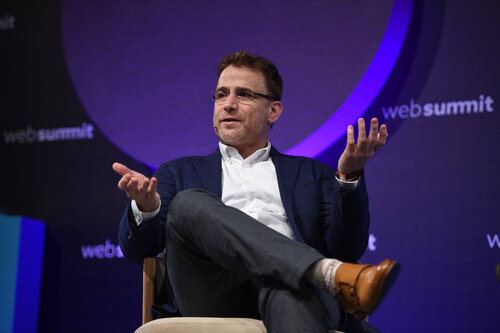
Co-founder of Slack
1973-present
Canadian entrepreneur who co-founded Flickr and Slack. His philosophy on workplace communication and automation shaped how modern teams collaborate, emphasizing that automation should eliminate drudgery, not replace creativity.
Web Summit, CC BY 2.0, via Wikimedia Commons
There is a lot of automation that can happen that is not a replacement of humans, but of mind-numbing behavior.
- Stewart Butterfield, co-founder of Slack
Butterfield nails the distinction. The best automation targets drudgery, not decision-making. It handles the boring repetitive tasks that drain energy and create errors.
Think about what you want automated. Not the interesting problems. Not the conversations with people. Not the creative work. The tedious stuff. The status updates. The routine notifications. The data entry.
That’s where automation creates value without replacing human judgment.
Knowing what to automate

Author & Marketing Thought Leader
1960-present
American author and entrepreneur who has written 21 bestselling books on marketing, leadership, and change. Known for his daily blog and accessible insights on how businesses can thrive by being remarkable.
Joi Ito, CC BY 2.0, via Wikimedia Commons
The more we automate, the more we need people who think critically and creatively.
- Seth Godin
Automation handles the predictable. Humans handle the exceptions. As more routine work gets automated, the remaining work is all judgment calls, edge cases, and novel problems.
This means automation raises the bar for human work. The people who thrive are the ones who can think through problems that algorithms can’t solve. And with agentic AI entering the picture, this is more true than ever. Google Cloud’s AI agent trends report highlights that multi-agent systems will increasingly manage entire workflows - but they still need humans designing the workflows in the first place.
If you automate a mess, you get an automated mess.
- Rod Michael, IT executive
I’ve probably used this quote in fifty conversations. When someone wants to automate their current process immediately, without examining it first, this is my response.
The mess doesn’t disappear. It just runs on servers now. The workarounds become hardcoded. The exceptions become error messages. The confusion becomes technical debt.
Fix the mess first. Then automate.
Creator of Theory of Constraints
1947-2011
Israeli business management guru who developed the Theory of Constraints. His novel 'The Goal' became one of the best-selling business books ever, teaching constraint management through storytelling.
Wikimedia Commons, CC BY-SA 3.0
Automation is good, so long as you know exactly where to put the machine.
- Eliyahu Goldratt
Goldratt’s constraint theory applies directly to automation. Not all steps are equal. Some are bottlenecks. Some are waiting time. Some are pure waste.
Automating a non-bottleneck step might make you feel productive. It won’t increase output. The bottleneck still limits everything.
Find the constraint. Automate that. Then find the next constraint.
Why AI agents make process design more important
This is the part that frustrates me.
Agents are getting smarter. The workflows they need haven’t been built yet.
Gartner predicts that over 40% of agentic AI projects will be canceled by the end of 2027. Not because the technology doesn’t work. Because organizations are automating workflows that were already broken. More than 60% of organizations still rely on at least one legacy system, and when teams automate these workflows without fully understanding them, AI agents inherit the confusion.
You can’t GPT your way out of a broken workflow.
Something I’ve noticed across industries building workflow tools at Tallyfy, the pattern is clear: the organizations that succeed with automation - whether traditional or AI-driven - are the ones that define their processes first. Sequential steps. Parallel tracks. Decision points. Escalation paths. These aren’t just nice-to-have documentation. They’re the infrastructure AI agents need to operate.

CEO of Microsoft
1967-present
Indian-American CEO of Microsoft since 2014, credited with transforming the company's culture from competitive infighting to collaborative growth mindset. His leadership tripled Microsoft's market value.
Microsoft, CC BY-SA 4.0, via Wikimedia Commons
Our industry does not respect tradition. What it respects is innovation.
- Satya Nadella, CEO of Microsoft
Nadella reshaped Microsoft by recognizing that past success isn’t a future guarantee. The processes that worked in 2010 may be obsolete now. The tools that dominated yesterday aren’t necessarily right for tomorrow.
This applies to automation directly. The question isn’t “how have we always done this?” It’s “how should we do this now?” And right now, the answer increasingly involves designing workflows that both humans and AI agents can follow.
Getting adoption right
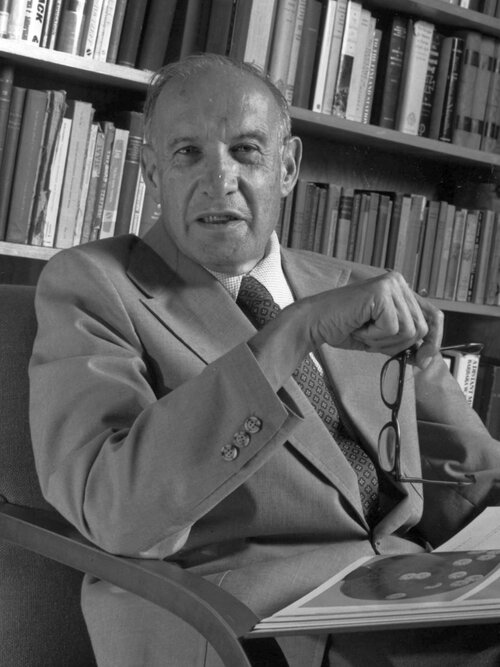
Management Consultant & Author
1909-2005
Austrian-American management consultant widely regarded as the father of modern management. His writings on management theory influenced business practices across the world and helped establish management as a legitimate discipline.
Jeff McNeill, CC BY-SA 2.0, via Wikimedia Commons
Culture eats strategy for breakfast.
- Peter Drucker (often attributed)
The best automation technology fails if people don’t use it. They find workarounds. They go back to email. They build shadow processes in spreadsheets.
Adoption isn’t a technology problem. It’s a culture problem. People need to understand why the automation exists, how it helps them, and what changes for them.
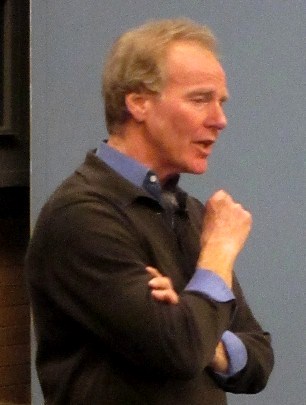
Author of The Fifth Discipline
1947-present
American systems scientist and senior lecturer at MIT Sloan School of Management. His book 'The Fifth Discipline' introduced the concept of the 'learning organization' and systems thinking as essential management disciplines for sustainable success.
MIT Sloan, CC BY-SA 4.0, via Wikimedia Commons
People don’t resist change. They resist being changed.
- Peter Senge
When automation is imposed from above, it meets resistance. When people help design it, they champion it.
We learned this building Tallyfy. The implementations that work best involve the people who will use the system. They identify the pain points. They suggest the solutions. They own the result. In our experience, one web development agency owner described how documented SOPs in Google Docs were routinely ignored by staff until the team was involved in rebuilding those procedures as executable workflows. Once the team had input, compliance became natural rather than forced.
Measuring success without fooling yourself

CEO of Berkshire Hathaway
1930-present
American investor and CEO of Berkshire Hathaway, widely regarded as one of the most successful investors in history. Known for his long-term value investing philosophy and candid shareholder letters on business principles.
Mark Hirschey, CC BY-SA 2.0, via Wikimedia Commons
It takes 20 years to build a reputation and five minutes to ruin it.
- Warren Buffett
Buffett’s talking about reputation, but the principle applies to automation. A system that works well for months can fail catastrophically in minutes. And that failure is what people remember.
Automated workflows need monitoring. Not just “is it running?” but “is it producing good outcomes?” Error rates. Completion times. Satisfaction scores. The metrics that matter, not vanity dashboards.
Risk comes from not knowing what you’re doing.
- Warren Buffett
Automation reduces certain risks and creates others. Automated processes are consistent and fast. They’re also brittle and opaque when poorly designed.
The risk isn’t in the automation itself. It’s in deploying automation you don’t understand. If you can’t explain exactly what the workflow does and why, you’re not ready to automate it.
What I keep coming back to
After years of building and working on workflow automation, some patterns are stubbornly consistent:
Start with the process, not the technology. Understand what you’re automating before you automate it. Fix the obvious problems first. This goes double for AI agents - they need defined workflows even more than traditional automation does.
Automate drudgery, not judgment. Machines handle repetitive tasks. Humans handle exceptions and decisions. The line between the two is getting blurrier with AI, but the principle holds.
Keep it simple. Complex automations break. Simple ones survive. I’ve seen workflows with fifty steps that could be ten. The original designer added steps for “what if” scenarios that never happen. Now the whole thing is unmaintainable.
Involve the people who do the work. They know what needs automating and what needs human attention. Skip this step and you’ll build something that looks great in a demo and dies in production.
Measure outcomes, not activity. Automation that runs isn’t automatically automation that helps.
Iterate continuously. Your first version will be wrong. Plan to improve it.
These principles shaped how we built Tallyfy. Not as another automation platform promising to replace humans. As a system that handles the boring work so people can focus on what matters.
Because the goal isn’t automation for its own sake. The goal is better work.
