
25 process improvement quotes that changed how I think about operations
The best wisdom on process improvement comes from people who spent decades in factories, boardrooms, and failed implementations. These quotes shaped how we built Tallyfy.
These insights remind us why process improvement matters.
Tallyfy is Process Improvement Made Easy
Summary
- Deming’s 85% rule is foundational - Most problems come from the system, not the people. Stop blaming workers for process failures.
- You can’t improve what you can’t describe - If your process lives only in people’s heads, it can’t be measured, taught, or scaled.
- Standardization enables improvement, not rigidity - Without a baseline, every attempt at improvement is just guessing.
- Process improvement is never finished - The moment you stop improving, entropy takes over. See how Tallyfy enables continuous improvement
Why these quotes matter
I’ve spent over a decade building workflow software. In that time, I’ve read hundreds of books on process improvement, sat through countless consultant presentations, and watched companies succeed and fail at operational transformation.
The quotes that stuck with me aren’t the inspirational poster variety. They’re the ones that made me uncomfortable. The ones that challenged assumptions I didn’t know I had.
This isn’t a listicle. Each quote here shaped how we think about process at Tallyfy. I’ll tell you why.
Why systems thinking changes everything
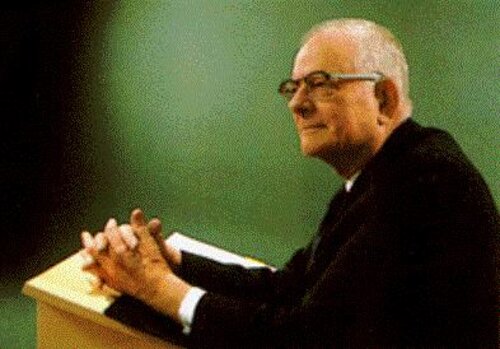
Statistician & Quality Management Pioneer
1900-1993
American engineer, statistician, and management consultant who taught Japanese manufacturers post-WWII quality methods. His 14 Points for Management and concept that 85% of problems are systemic transformed manufacturing worldwide.
Public domain, via Wikimedia Commons
A bad system will beat a good person every time.
- W. Edwards Deming
Deming said this to American manufacturing executives in the 1980s who kept blaming workers for quality problems. His point was brutal: hire the best people in the world, put them in a broken system, and they’ll fail.
The pattern we keep running into is exactly this. A company has a “performance problem” with their customer service team. Response times are slow. Customers are angry. Management wants to fire people and hire better ones.
Then you look at the actual process. Tickets bounce between three departments. Nobody knows who owns what. Information is scattered across five different tools. The people aren’t the problem. The system is. A pharmaceutical company once listed their six biggest problems: ownership gaps, missed deadlines, unclear reviews, data scattered across email, limited access for global collaborators, and no real-time updates. Not one of those was a “people problem.” Every single one was a system problem.
This is why we built Tallyfy to make processes visible. When you can see the system, you can fix the system.
Eighty-five percent of the reasons for failure are deficiencies in the systems and process rather than the employee. The role of management is to change the process rather than badgering individuals to do better.
- W. Edwards Deming, Out of the Crisis (1986)
The 85% figure isn’t arbitrary. Deming calculated it from decades of statistical analysis in manufacturing plants. Only 15% of problems trace back to individual worker error. The rest? System design.
This completely inverts how most companies handle problems. Instead of asking “who messed up?”, the question becomes “what about our process allowed this to happen?
If you can’t describe what you are doing as a process, you don’t know what you’re doing.
- W. Edwards Deming
This quote haunts me. I’ve asked hundreds of companies to describe their core processes. Most can’t do it clearly. They say things like “well, it depends” or “Sarah handles that” or “we just figure it out.”
That’s not a process. That’s hope dressed up as a workflow. One digital strategy consulting firm told me their internal processes were “manual and ad-hoc” before they forced themselves to write them out. The result? “Steps are not missed or done out of order.” That simple act of description created accountability.
The act of describing a process forces clarity. It exposes the gaps, the assumptions, the invisible handoffs that nobody owns. When we built Tallyfy, we made the process description the workflow itself. You can’t run it without describing it first.
On standardization
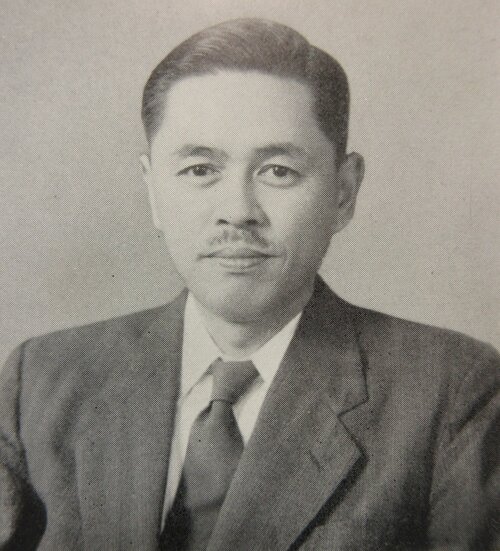
Father of the Toyota Production System
1912-1990
Japanese industrial engineer who developed the Toyota Production System, the foundation of Lean manufacturing. His innovations in just-in-time production and waste elimination revolutionized manufacturing globally.
Wikimedia Commons, CC BY-SA 4.0
Where there is no standard there can be no kaizen.
- Taiichi Ohno, creator of the Toyota Production System
Kaizen means continuous improvement. Ohno’s point is counterintuitive: you can’t improve something that has no defined state.
Imagine trying to improve your morning routine without knowing what your current morning routine actually is. You might wake up at different times, skip breakfast sometimes, check email immediately or not at all. How would you measure improvement? Against what baseline?
That’s why standardization comes before optimization. Not because we love bureaucracy. Because without it, improvement is just randomness with better marketing.
All we are doing is looking at the time line, from the moment the customer gives us an order to the point when we collect the cash. And we are reducing that time line by removing the non-value-added wastes.
- Taiichi Ohno
This is the essence of lean thinking. Everything between customer order and payment is either adding value or adding waste. Your job is to identify which is which.
Most companies have never mapped this timeline. They’ve got no idea how long their processes actually take. They measure task completion but not flow time. They optimize individual steps while the overall process gets slower.
Tallyfy tracks this automatically. You can see exactly how long each process takes, where it gets stuck, and what’s actually slowing things down.
Something is wrong if workers do not look around each day, find things that are tedious or boring, and then rewrite the procedures.
- Taiichi Ohno
I love this quote because it puts improvement responsibility on the people doing the work. Not consultants. Not managers in corner offices. The people who actually run the process every day.
They know what’s tedious. They know what’s boring. They know what’s broken. The question is whether your system allows them to change it.
Most process documentation sits in SharePoint graveyards. Nobody reads it. Nobody updates it. But when processes live in a system where they are actually executed, the people running them can propose changes. They can see what others have suggested. Improvement becomes collaborative, not bureaucratic.
On management and leadership
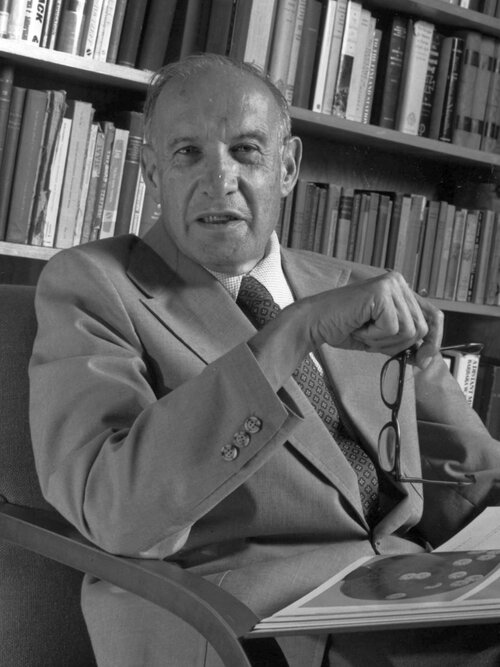
Management Consultant & Author
1909-2005
Austrian-American management consultant widely regarded as the father of modern management. His writings on management theory influenced business practices across the world and helped establish management as a legitimate discipline.
Jeff McNeill, CC BY-SA 2.0, via Wikimedia Commons
There is nothing so useless as doing efficiently that which should not be done at all.
- Peter Drucker
This is Drucker at his most provocative. Before you optimize, ask: should this even exist?
I’ve watched companies spend months automating processes that should have been eliminated. They made the wrong thing faster. The ROI was negative before they started.
We ask every Tallyfy customer: before we automate this, should it exist? Sometimes the answer is no. Sometimes the best process improvement is deletion.
What gets measured gets managed.
- Peter Drucker, The Practice of Management (1954)
This cuts both ways. Measure the wrong thing and you’ll manage the wrong thing. Measure response time without measuring resolution quality and you get fast, useless answers.
But Drucker’s core point holds: invisible work stays invisible. Unmeasured processes can’t be improved systematically. You’re just guessing.
That’s why Tallyfy surfaces metrics automatically. You don’t have to build dashboards or run reports. The data emerges from the work itself.
Management is doing things right; leadership is doing the right things.
- Peter Drucker
Process improvement is management work. Deciding which processes to improve is leadership work.
I’ve seen companies invest massive effort in perfecting the wrong processes. They get really good at things that don’t matter. The processes that actually drive customer value stay broken because nobody prioritized them.
On continuous improvement
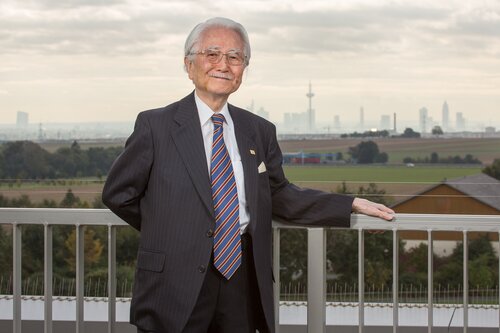
Founder of Kaizen Institute
1930-present
Japanese organizational theorist who introduced the concept of Kaizen (continuous improvement) to the Western world. His book 'Kaizen: The Key to Japan's Competitive Success' defined the philosophy of incremental, ongoing improvement.
Kaizen Institute, CC BY-SA 4.0, via Wikimedia Commons
The message of the Kaizen strategy is that not a day should go by without some kind of improvement being made somewhere in the company.
- Masaaki Imai, Kaizen: The Key to Japan’s Competitive Success (1986)
Not a day. That sounds extreme until you realize what Imai means. He’s not talking about major overhauls. He means small, incremental changes. A slightly clearer instruction. A removed step. A better handoff.
These tiny improvements compound. Over years, they create dramatic differences between companies that embrace them and companies that don’t.
The problem is that most organizations only do improvement during “initiatives” or “projects.” Between projects? Nothing changes. Entropy creeps in.
Kaizen means ongoing improvement involving everybody, without spending much money.
- Masaaki Imai
This directly challenges the consulting industrial complex. Improvement doesn’t require expensive engagements. It requires a culture where everyone identifies problems and fixes them.
Something I’ve noticed across industries is that the most successful teams treat process improvement as a continuous activity, not a project. They don’t wait for the quarterly review. They fix things as they find them.
On constraints and bottlenecks

Creator of Theory of Constraints
1947-2011
Israeli business management guru who developed the Theory of Constraints. His novel 'The Goal' became one of the best-selling business books ever, teaching constraint management through storytelling.
Wikimedia Commons, CC BY-SA 3.0
An hour lost at a bottleneck is an hour lost for the entire system.
- Eliyahu Goldratt, The Goal (1984)
Goldratt’s Theory of Constraints is elegantly simple: every system has one constraint that limits its output. Improve anything except that constraint and you improve nothing.
I’ve watched companies pour resources into optimizing steps that weren’t bottlenecks. They got faster at things that didn’t matter. The constraint stayed the same. Output stayed the same.
Tallyfy shows you where work gets stuck. You can see the bottlenecks. You don’t have to guess.
Tell me how you measure me, and I will tell you how I will behave.
- Eliyahu Goldratt
This explains most organizational dysfunction. People optimize for their metrics, even when those metrics conflict with overall system performance.
Sales closes deals that operations can’t deliver. Operations focuses on capacity use while customers wait. Finance delays approvals to hit budget targets. Everyone’s hitting their numbers. The company is failing.
Process improvement requires system-level thinking. Not department-level thinking.
On quality
Quality is free. It is not a gift, but it is free. What costs money are the unquality things - all the actions that involve not doing jobs right the first time.
- Philip Crosby, Quality Is Free (1979)
Crosby calculated that poor quality costs companies 20-40% of revenue. Not building quality. Fixing problems that shouldn’t exist.
Every rework loop in your process is a quality failure. Every customer complaint that requires escalation. Every shipment that gets returned. These aren’t random events. They’re symptoms of process design.
Quality is not an act, it is a habit.
- Aristotle
This ancient wisdom applies directly to process improvement. Quality comes from systems that make doing the right thing easier than doing the wrong thing.
If following your process requires heroic effort, people will take shortcuts. If quality checks are manual and easy to skip, they will get skipped. Design for the behavior you want.
Stop storing knowledge in people’s heads
The palest ink is better than the best memory.
- Chinese Proverb
This applies directly to process documentation. The senior person who knows how everything works will leave someday. The institutional knowledge in their head leaves with them.
I’ve seen companies lose millions when a key person departed. Nobody else knew how the process actually worked. They had to reconstruct it from fragments and guesswork.
Document your processes. Not in files nobody reads. In systems people actually use.
If you depict a process, people will probably use it. If you describe it in text, they will not read it.
- Anonymous operations consultant
This is why visual workflow systems work better than procedure manuals. People don’t read walls of text. They follow flows.
Tallyfy is visual by default. You don’t have to train people to read it. They can see what happens next.
On change and resistance
People don’t resist change. They resist being changed.
- Peter Senge, The Fifth Discipline (1990)
Senge identified the core problem with top-down process improvement. When processes are imposed, people resist. When they help design them, they own them.
That’s why we built collaboration into Tallyfy. Process changes aren’t dictated from above. Teams can suggest improvements, comment on steps, and shape how work flows.
The only way to make sense out of change is to plunge into it, move with it, and join the dance.
- Alan Watts
Not a business quote, but applicable. Process improvement isn’t a destination. It’s ongoing movement. The companies that succeed aren’t the ones that found the perfect process. They’re the ones that keep adapting.
On execution
Execution is the gap between what a company’s leaders want to achieve and the ability of their organizations to deliver it.
- Larry Bossidy and Ram Charan, Execution: The Discipline of Getting Things Done (2002)
Strategy without execution is fantasy. Process improvement is fundamentally about execution. Not planning. Not discussing. Actually changing how work gets done.
In preparing for battle I have always found that plans are useless, but planning is indispensable.
- Dwight D. Eisenhower
Eisenhower understood something about process design: the plan will change. What matters is the discipline of planning itself. You think through scenarios. You identify dependencies. You anticipate problems.
Static process documents become outdated immediately. Living processes evolve with reality.
On simplicity
Simplicity is the ultimate sophistication.
- Leonardo da Vinci
The best processes are simple. Not because simple is easy. Because simple survives. Complex processes break down. People skip steps. Edge cases multiply. Maintenance becomes impossible.
When we evaluate processes at Tallyfy, we ask: can this be simpler? Usually the answer is yes.
Any intelligent fool can make things bigger, more complex, and more violent. It takes a touch of genius - and a lot of courage - to move in the opposite direction.
- E.F. Schumacher, Small Is Beautiful (1973)
Adding steps is easy. Removing them requires courage. You’ve got to believe that less can be more. You’ve got to resist the organizational pressure to add reviews, approvals, and checkpoints.
The best process improvement often involves subtraction, not addition.
What these quotes taught me
After years of working with these ideas, a few principles emerged:
The system matters more than the people. Hire well, but design better.
You can’t improve what you can’t see. Make work visible before trying to optimize it.
Standardization enables freedom. Without baselines, improvement is guessing.
Small changes compound. Don’t wait for the big initiative. Fix something today.
Simplicity wins. Complex processes break. Simple ones survive.
These principles shaped how we built Tallyfy. Not as another documentation tool. As a system where processes live, run, and improve continuously.
Because the best quote about process improvement might be the simplest: if you want different results, change the process.
About the Author
Amit is the CEO of Tallyfy. He is a workflow expert and specializes in process automation and the next generation of business process management in the post-flowchart age. He has decades of consulting experience in task and workflow automation, continuous improvement (all the flavors) and AI-driven workflows for small and large companies. Amit did a Computer Science degree at the University of Bath and moved from the UK to St. Louis, MO in 2014. He loves watching American robins and their nesting behaviors!
Follow Amit on his website, LinkedIn, Facebook, Reddit, X (Twitter) or YouTube.

Automate your workflows with Tallyfy
Stop chasing status updates. Track and automate your processes in one place.